

SEO best practices for 2027 are not about chasing every new trend. They are about keeping your technical SEO strong, publishing genuinely helpful content, building trust, and adapting to how people discover information through traditional search and AI-powered answers.
Quick answer: The SEO fundamentals still matter, but success now requires more than rankings and organic traffic. Make your pages easy to crawl, clearly answer search intent, add original experience and evidence, and measure qualified leads alongside AI search visibility.
Key takeaways
- What still works: Technical SEO, helpful content, internal linking, relevant backlinks, and trust.
- What has changed: AI Overviews and other AI search experiences can influence how people discover information and click through to websites.
- What to stop: Publishing mass-produced content without added value, keyword stuffing, buying links to manipulate rankings, and making changes based on SEO hype.
- What to measure: Organic clicks, qualified leads, conversions, revenue, and AI visibility.
- What to do next: Audit your website, fix the biggest issues first, and track changes consistently.
Many site owners now see a strange pattern. Rankings look fine, but clicks go down. It feels unfair and confusing. This guide explains why it happens and what to do about it.
We wrote this guide at RankON Technologies for people who need clear answers, not hype.
You will learn which SEO best practices for 2027 still work, which ones changed, and which habits to stop. Each section gives the answer first, then shows you how to act on it.
What Has Changed in SEO for 2027?
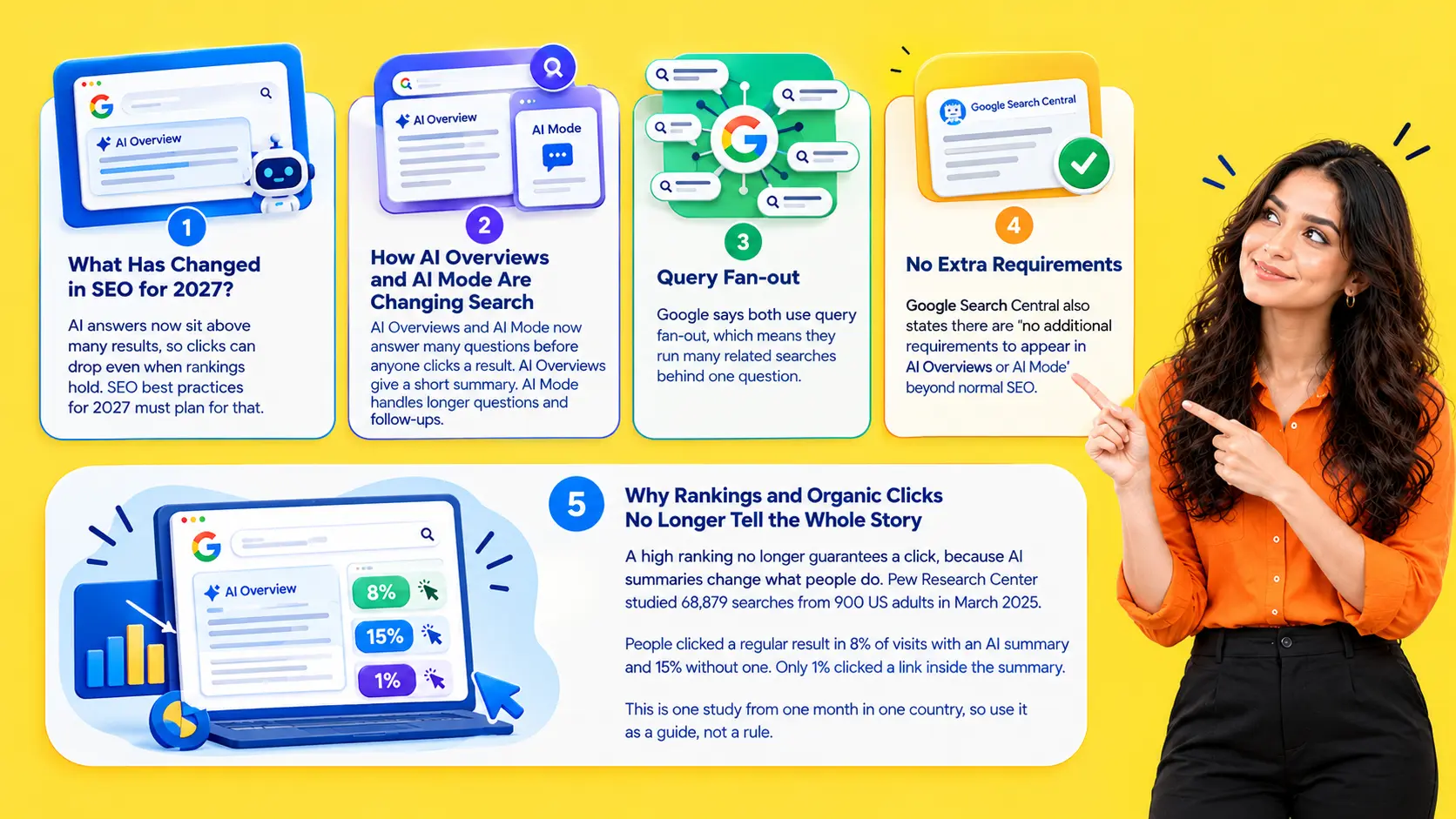
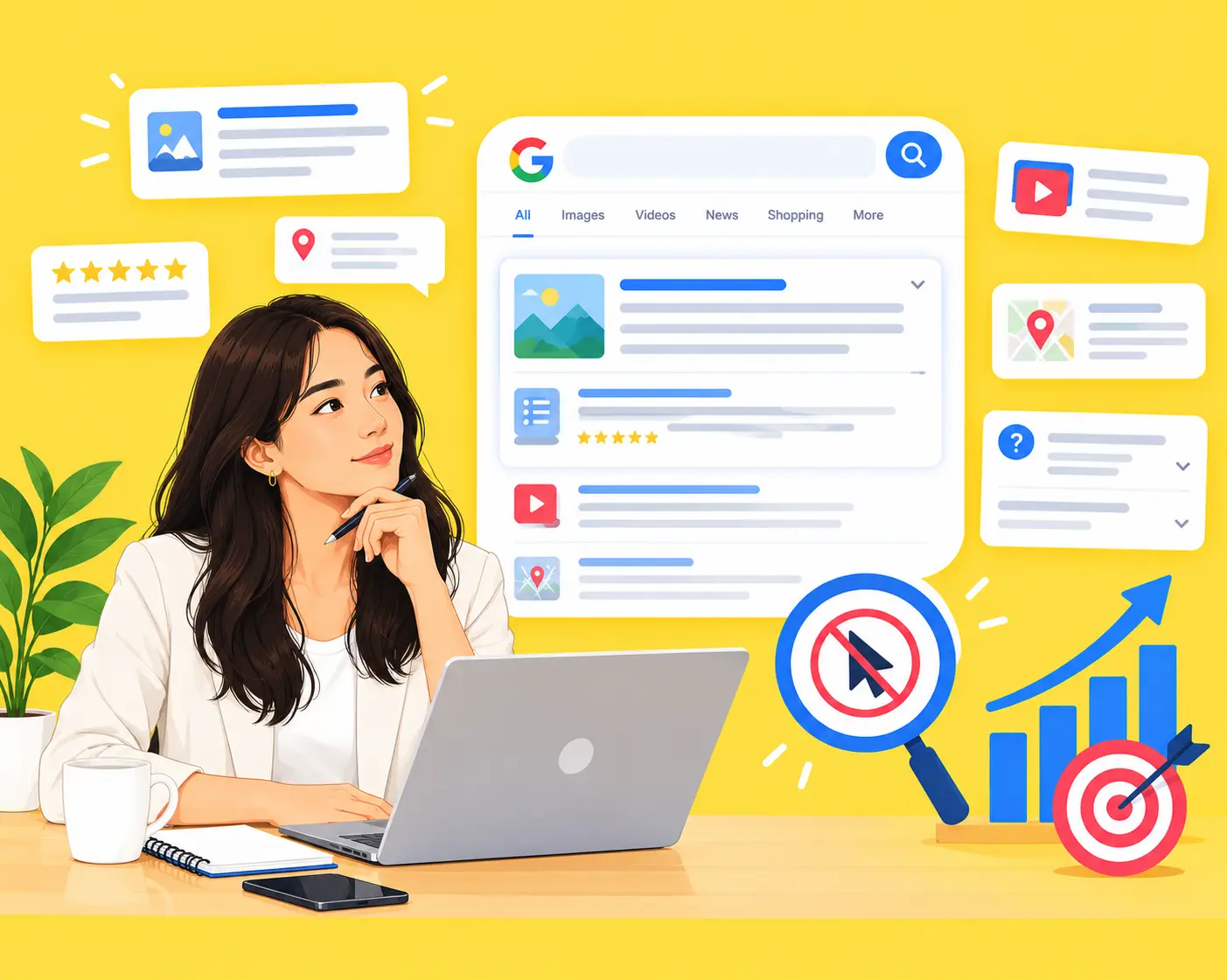
AI answers now appear above many results, so clicks can drop even when rankings remain stable. SEO best practices for 2027 must plan for that.
How AI Overviews and AI Mode Are Changing Search
AI Overviews and AI Mode now answer many questions before anyone clicks a result. AI Overviews give a short summary. AI Mode handles longer questions and follow-ups. Google says both use query fan-out, meaning they run many related searches behind a single query.
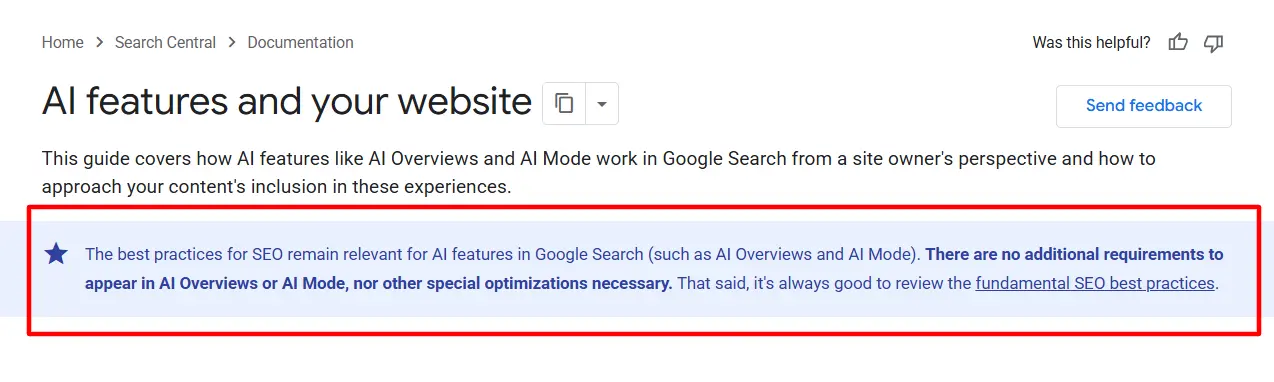
Google Search Central also states there are ‘no additional requirements to appear in AI Overviews or AI Mode’ beyond normal SEO.
Further Reading: How Google AI Overviews Choose Sources (And How Your Website Can Become One)
Why Rankings and Organic Clicks No Longer Tell the Whole Story
A high ranking no longer guarantees a click because AI summaries change how people behave. The Pew Research Center analyzed 68,879 searches made by 900 US adults in March 2025.
People clicked a regular result in 8% of visits with an AI summary and 15% without one. Only 1% clicked a link inside the summary.
This is one study from one month in one country, so use it as a guide, not a rule.
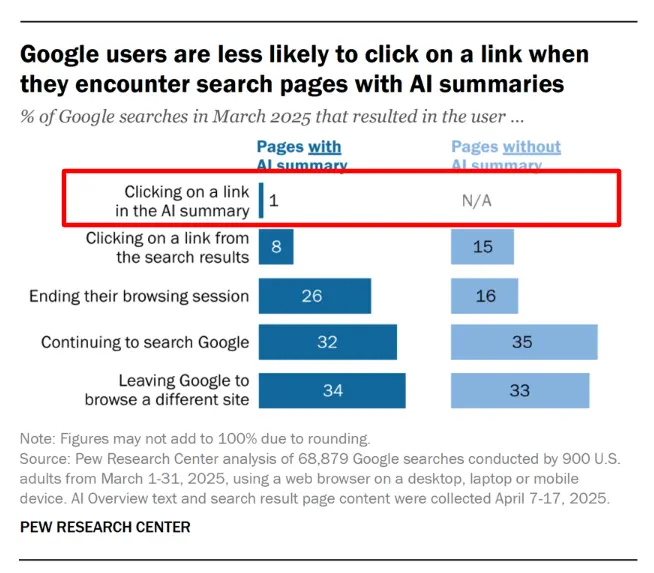
Source: Pew Research Center.
How Search Everywhere Is Expanding Brand Discovery
People now look for answers on Google, YouTube, Reddit, TikTok, Amazon, and AI tools such as ChatGPT, Gemini, and Perplexity. Your brand can be found or missed on any of them.
Pew also found that Wikipedia, YouTube, and Reddit were the sources Google AI summaries cited most often. So tell one clear brand story and share useful content where your buyers already spend time.
Further reading: How to Increase Brand Mentions Online for Better AI Visibility
What SEO Best Practices Still Work in 2027?
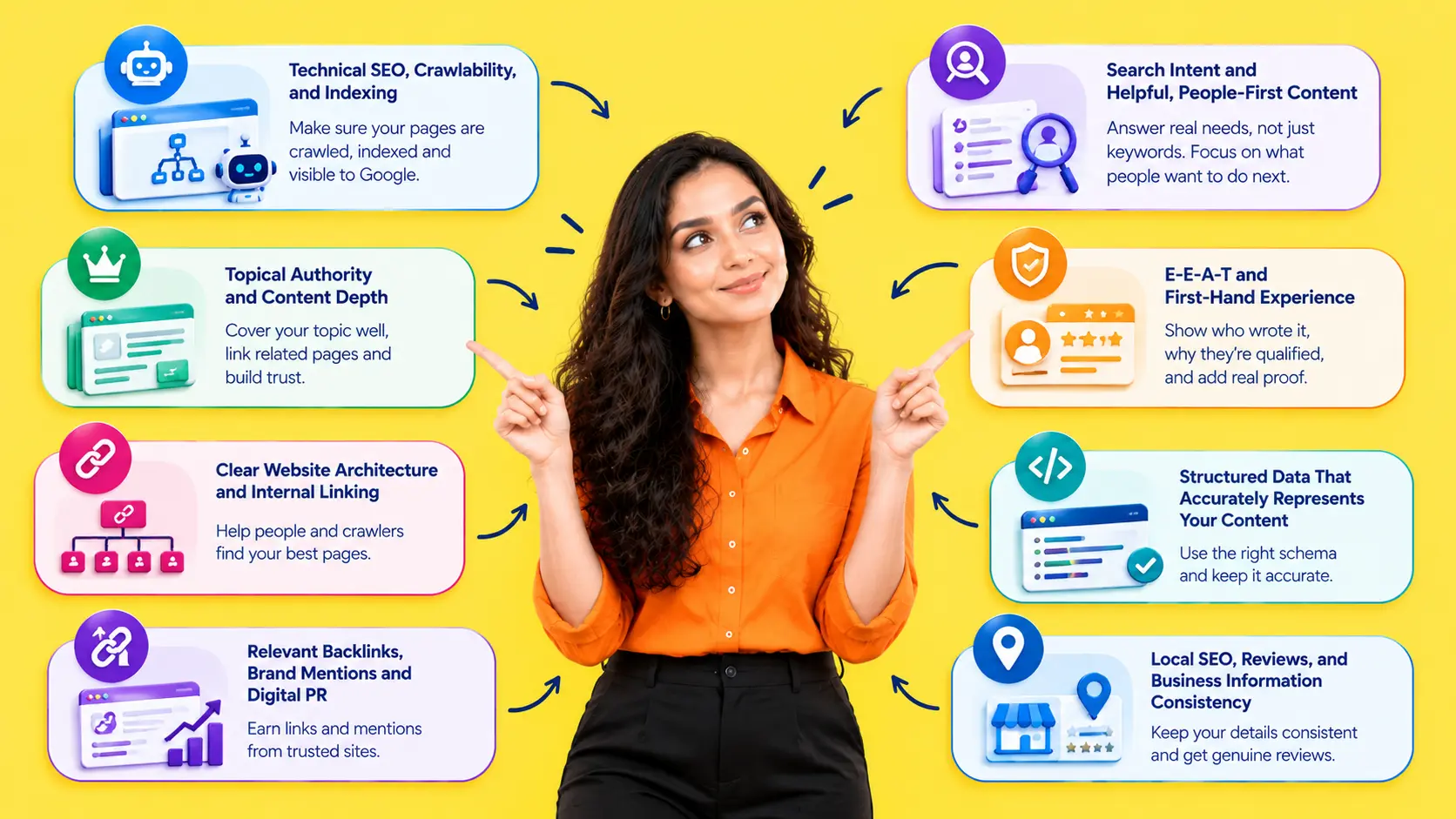
The basics still work: pages Google can crawl, helpful content, clear structure, and trust. Google says AI features use the same Search systems.
Technical SEO, Crawlability, and Indexing
A page must be crawled and indexed before it can appear anywhere, including in AI features.
Google says a page needs to be indexed and eligible for a snippet to appear as a supporting link.
Check robots.txt, noindex tags, and any CDN rules that block Googlebot. Then use Google Search Console and its URL Inspection tool to see what Google sees.
Further Reading: Complete Technical SEO Guide 2026: Crawlability, Indexing, and Crawl Errors Explained
Search Intent and Helpful, People-First Content
People-first content answers the real need behind a search.
Google asks creators to think about who made the content, how it was made, and why it exists. Find out what the reader wants to do next, and give that answer first. If the page would still help a visitor who has never used Google, you are on the right track.

Further Reading: SEO Content Strategy for AI Visibility: A Guide for Marketing Leaders
Topical Authority and Content Depth
Topical authority means you cover a subject so well that readers and search systems trust you for it. Build one strong main page, then add pages for each related question and link them together. Depth does not mean length.
Google says there is no ideal page length, so write what your audience needs and stop.
E-E-A-T and First-Hand Experience
E-E-A-T stands for experience, expertise, authoritativeness, and trustworthiness, and it is how Google describes high-quality content. Show who wrote the page and why they know the topic.
Add real photos, test results, and client stories that you can prove.
Google’s AI guide says a first-hand review offers a unique perspective, while a summary of other pages merely repeats what already exists.
Further Reading: E-E-A-T in SEO: What It Means and How to Improve It in 2026
Clear Website Architecture and Internal Linking
A clear site structure helps people and crawlers find your best pages. Google lists internal links as a basic step for appearing in AI features. Group pages by topic and keep key pages a few clicks from the home page.
Use link text that says what the next page is about, and never leave a good page without links pointing to it.
Further Reading: Website Architecture for SEO: Importance and Its Benefits in SEO
Structured Data That Accurately Represents Your Content
Structured data is code that labels what a page contains, such as an article, product, or local business.
Google says the markup must match the visible text, and no special schema is needed for AI search. Use types like Organization, Article, Product, LocalBusiness, and BreadcrumbList only where they are true. Test the code with Google’s Rich Results Test.
Relevant Backlinks, Brand Mentions, and Digital PR
Links and mentions from trusted sites still help people find and trust your brand. Earn them with original research, useful tools, and real news that journalists want to share. Do not buy them. Google’s spam policies consider buying links to be link spam, unless the links use a nofollow or sponsored tag.
Local SEO, Reviews, and Business Information Consistency
Local SEO works when your business details match everywhere and your reviews are honest.
Google recommends keeping your Business Profile and Merchant Center information up to date. Use the same name, address, and phone number across your site, profile, and listings.
Ask happy customers for reviews, and reply to each one in a polite, human way.
Further Reading: Local SEO in 2026: How to Do Local SEO for Your Business
What Has Changed in SEO Strategy?
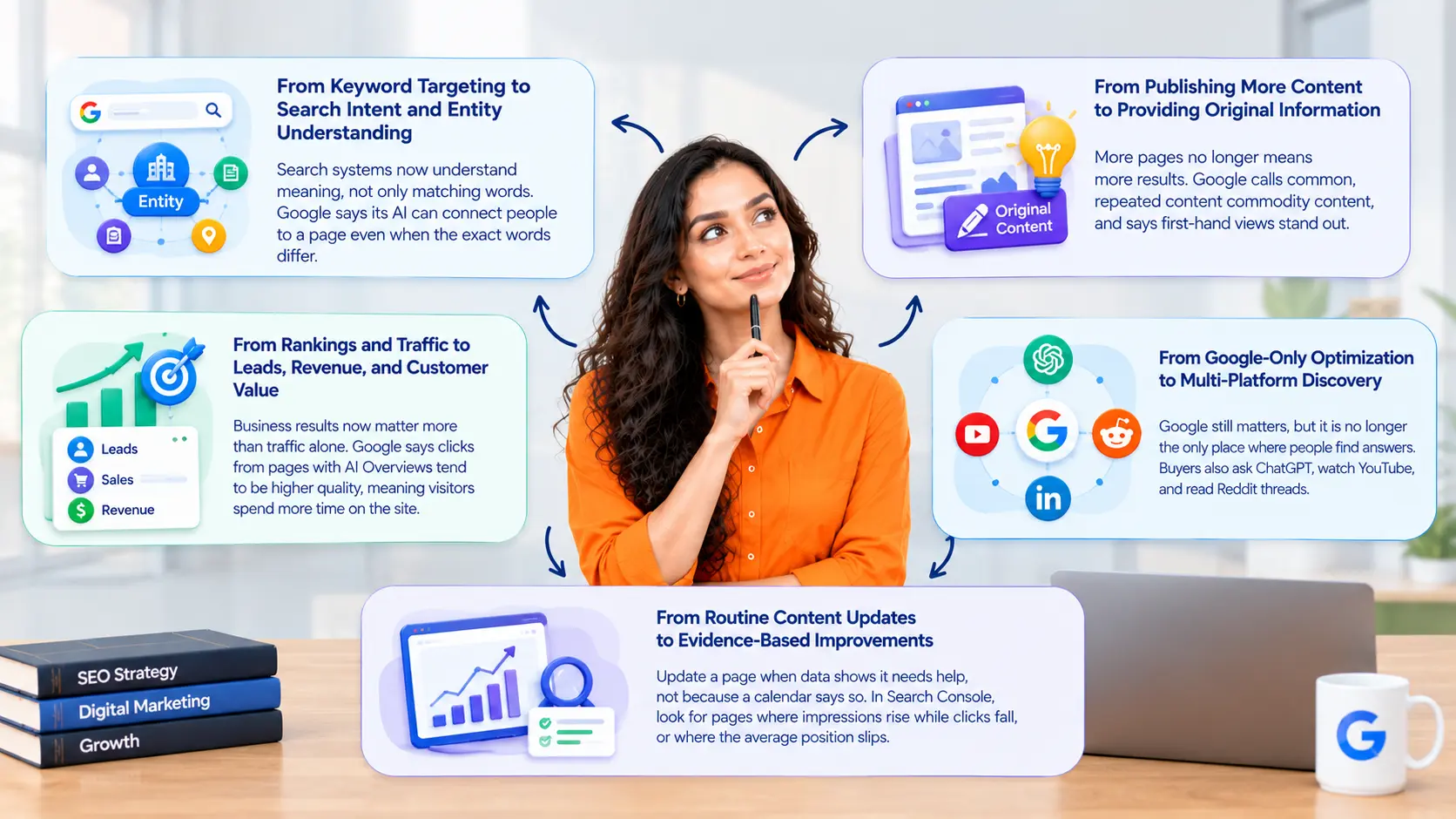
Strategy has moved from chasing keywords and traffic to serving intent, adding original value, and proving business results.
From Keyword Targeting to Search Intent and Entity Understanding
Search systems now understand meaning, not only matching words. Google says its AI can connect people to a page even when the exact words differ. An entity is a clear thing, such as Rankon Technologies, Google Search Console, or Core Web Vitals. Name the entities on your page clearly, answer their related questions, and give each page one main intent.
Further Reading: What Is Entity SEO? Why It Matters for Your Brand in AI Search
From Publishing More Content to Providing Original Information
More pages no longer mean more results. Google calls common, repeated content commodity content, and says first-hand views stand out. Before you publish, ask what new fact, example, test, or data you can add.
If the answer is nothing, improve an old page instead. One strong page beats five thin ones.
From Rankings and Traffic to Leads, Revenue, and Customer Value
Business results now matter more than traffic alone. Google says clicks from pages with AI Overviews tend to be higher quality, meaning visitors spend more time on the site. Track form fills, calls, sales, and lead quality in Google Analytics.
For example:
A page with 100 visits and 10 leads is worth more than a page with 1,000 visits and none.
From Google-Only Optimization to Multi-Platform Discovery
Google still matters, but it is no longer the only place where people find answers. Buyers also ask ChatGPT, watch YouTube, and read Reddit threads. Keep your brand name, service descriptions, and key facts consistent across your website, LinkedIn, YouTube, and review sites. Then share honest answers when your audience asks its questions.
From Routine Content Updates to Evidence-Based Improvements
Update a page when data shows it needs help, not because a calendar says so. In Search Console, look for pages where impressions rise while clicks fall, or where the average position slips. Then fix the exact gap, such as a missing answer, an old fact, a weak title, or a thin section. Write down what you changed and when you changed it, so you can learn from the result.
How to Optimize for Google AI Overviews, AI Mode, and Other AI Search Experiences

To appear in AI search, make pages crawlable, answer clearly, prove your claims, and build a real brand. No special trick is needed.
Make Important Content Accessible to Search Crawlers
AI features can only use content that Google can reach as text. Keep key facts in plain HTML text, not only inside images or pop-ups.
Allow Googlebot in robots.txt and in your CDN. Google also says no new AI text files are needed, and it ignores llms.txt, so skip that work for Google Search.
Further Reading: What Is Entity SEO? Why It Matters for Your Brand in AI Search
Answer Questions Clearly Before Expanding on the Details
Put the direct answer in the first sentence, then explain. This helps readers who skim and helps systems pull the right part of the page. Google says there is no need to chop content into tiny pieces, because its systems can find the useful part of a longer page. So write naturally. Use a question as a heading, answer it fast, then add the how and why.
Support Claims With Evidence, Examples, and Credible Sources
A claim with a source earns more trust than a claim alone. Name the source, the date, and the group that did the study, as we did with Pew Research Center above. Add an example from real work you can prove.
If you have no proof yet, say what you know and what you are still testing, and do not invent numbers.
Strengthen Brand Entities and Independent Online Mentions
A strong brand is one that people and machines can identify clearly. Use the same brand name, logo, and description on your site, Google Business Profile, LinkedIn, and YouTube.
Earn real mentions through useful work, talks, and honest reviews. Google warns that seeking inauthentic mentions is not as helpful as it seems, so do not fake them.
Use Relevant Structured Data Without Expecting Guaranteed AI Citations
Structured data helps Google understand a page, but it does not guarantee an AI citation. Google says there is no special schema for AI search and advises against overfocusing on it. Keep using true markup for rich results.
One more fact: since 2023, Google has shown FAQ rich results mainly for well-known government and health sites, so do not add FAQ markup in hopes of a big gain.
Measure AI Visibility With a Consistent Prompt Set
A fixed list of prompts lets you compare AI answers month to month. Write 20 to 30 real questions your buyers ask. Run them each month in Google AI Mode, ChatGPT, Gemini, and Perplexity. Record whether your brand appears, which pages are cited, and what the answer says about you. AI answers change often, so treat the results as signals, not proof.
What SEO Practices Should You Stop Doing in 2027?
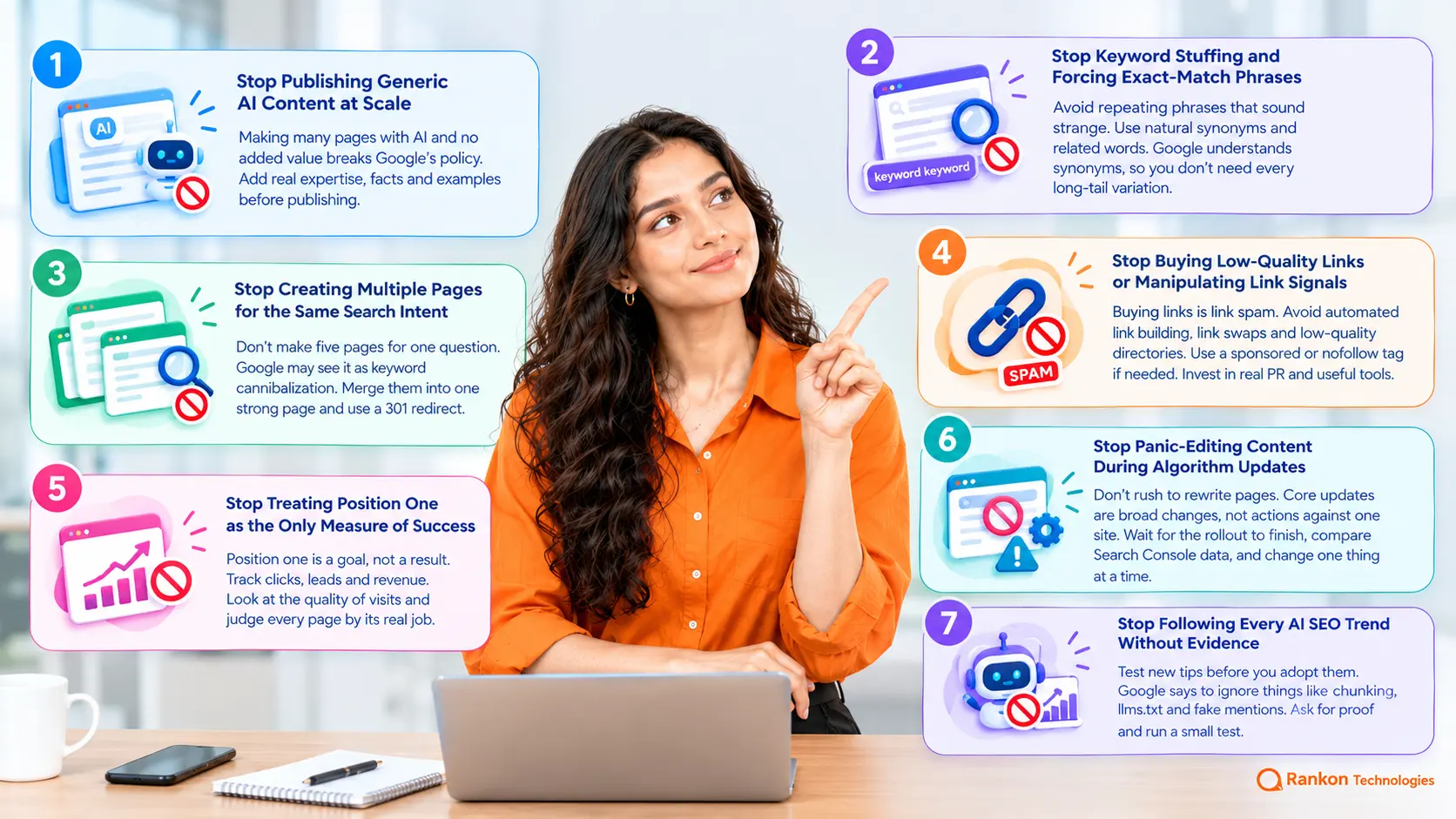
Stop any tactic made to trick systems instead of helping people. These habits waste money and can hurt your site.
Stop Publishing Generic AI Content at Scale
Making many pages with AI and no added value breaks Google’s scaled content abuse policy. Google says the policy applies no matter how the content is made. AI can help with research and first drafts.
A real expert must add facts, examples, and a careful edit before anything goes live.
Stop Keyword Stuffing and Forcing Exact-Match Phrases
Repeating a phrase until it sounds strange is keyword stuffing, and Google lists it as spam. Use your main phrase where it fits, then use plain synonyms and related words.
Google says its AI understands synonyms, so you do not need every long-tail variation. Read the page aloud. If a sentence sounds odd, rewrite it.
Stop Creating Multiple Pages for the Same Search Intent
Do not build five pages for one question. Google warns that creating separate pages for every search variation, primarily to manipulate rankings, can violate its scaled content policy. Pages that compete for the same intent also split your links and signals. This is called keyword cannibalization. Merge them into one stronger page and use a 301 redirect from the old URLs.
Stop Buying Low-Quality Links or Manipulating Link Signals
Buying links to boost rankings is link spam. Google also lists automated link building, link swaps made only for cross-linking, and low-quality directory links. Paid links are acceptable when they carry a sponsored or nofollow tag. Put that budget into original research, helpful tools, and digital PR that earns links honestly.
Stop Treating Position One as the Only Measure of Success
Position one is a goal, not a result. A top ranking with an AI summary above it can bring fewer clicks, and a lower page can bring more leads. Track clicks, leads, and revenue for each page, and assess the quality of visits. Judge every page by the job it has to do for your business.
Stop Panic-Editing Content During Algorithm Updates
Do not rewrite pages in a hurry when an update begins. Core updates are broad changes to Google’s systems, not actions against one site. Wait until the rollout ends on the Google Search Status Dashboard. Then compare Search Console data before and after, change one thing at a time, and write down every change so you can see what worked.
Stop Following Every AI SEO Trend Without Evidence
Test a new AI SEO tip before you adopt it. Google’s guide says chunking content, llms.txt files, and fake mentions are things you can ignore for Google Search. John Mueller of Google compared llms.txt to the old keywords meta tag, as reported by Search Engine Journal. Ask where the proof is, and run a small test first.
How to Audit Your Website Against SEO Best Practices for 2027
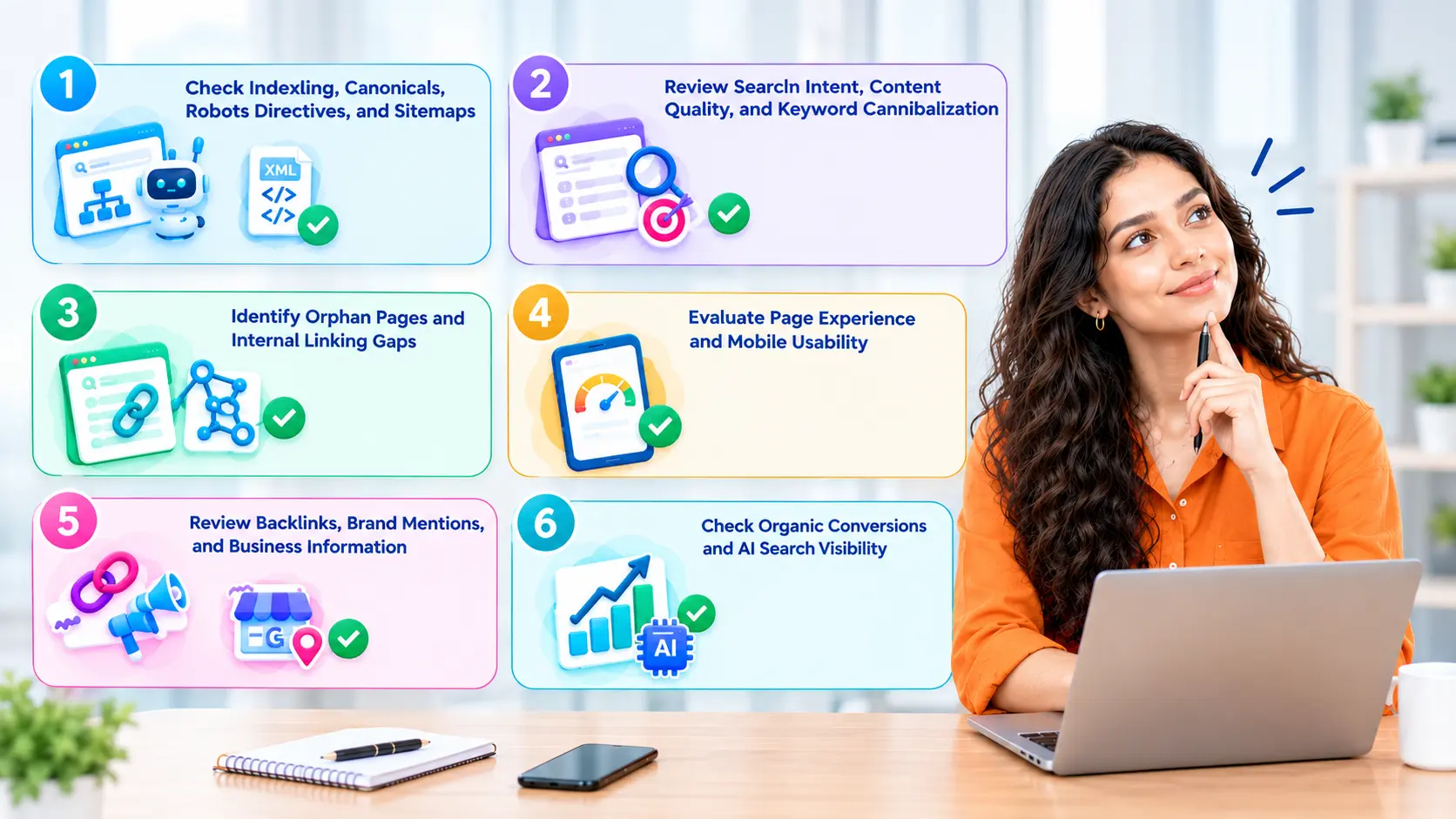
Audit six areas: indexing, content, internal links, page experience, trust signals, and results. Fix the biggest problems first.
Check Indexing, Canonicals, Robots Directives, and Sitemaps
Start with indexing, because a page that is not indexed cannot rank. In Search Console, open the Pages report and review why URLs are excluded.
Check canonical tags, robots.txt, noindex tags, and your XML sitemap.
Then crawl the site with Screaming Frog to find redirect chains, broken links, and blocked pages.
Review Search Intent, Content Quality, and Keyword Cannibalization
List your top pages and match each one to a single search intent.
Ask three things:
Does it answer the reader’s question first?
Does it show who wrote it?
Does it add something new?
Then search a key query and see whether two of your pages show up for it. If they do, merge them or give each a clearly different job.
Identify Orphan Pages and Internal Linking Gaps
An orphan page has no internal links pointing to it. Crawl your site with Screaming Frog, then compare the crawl list with your sitemap and your Google Analytics page list.
Pages in the sitemap but missing from the crawl are orphans. Add links from related pages, or remove pages that no longer serve a purpose.
Further Reading: Internal Linking in SEO: What Are The Benefits?
Evaluate Page Experience and Mobile Usability
Page experience means the page loads fast, responds fast, and stays steady on the screen. Google’s Core Web Vitals targets are Largest Contentful Paint of 2.5 seconds or less, Interaction to Next Paint of 200 milliseconds or less, and Cumulative Layout Shift of 0.1 or less, at the 75th percentile. Check them in Search Console and PageSpeed Insights, then test key pages on a real phone.
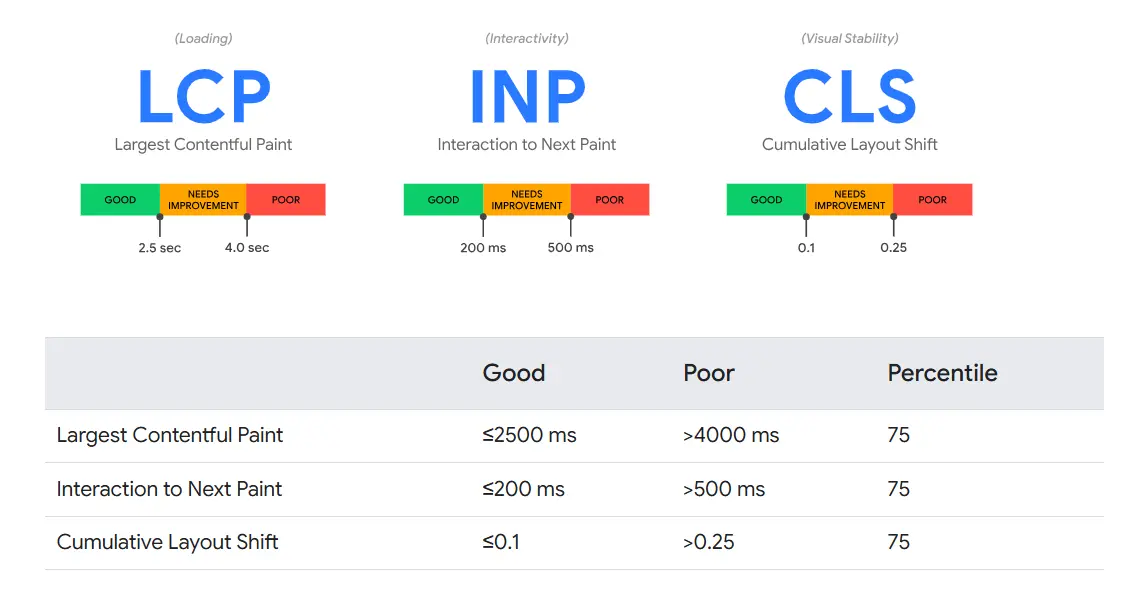
Source: web.dev.
Review Backlinks, Brand Mentions, and Business Information
Look at who links to you and who talks about you. Use Ahrefs or Semrush to spot spammy or paid links and to find strong links you can build on.
Search your brand name and read what people say. Then check that your name, address, phone number, hours, and Google Business Profile match your website exactly.
Check Organic Conversions and AI Search Visibility
Finish by checking whether organic visits become leads. In Google Analytics, count form fills, calls, and sales from organic search for each landing page. Then open the Generative AI report in Search Console and run your prompt set in AI tools.
Note which pages bring leads but never appear in AI answers, and which do the opposite.
How to Measure SEO Performance in 2027
Measure impressions, clicks, leads, revenue, and AI visibility together. One number alone can mislead you.
Track Search Impressions, Clicks, CTR, and Average Position
Google Search Console shows how Google crawls, indexes, and displays your website. Its Performance report gives impressions, clicks, click-through rate, and average position.
Compare the same months year over year. Rising impressions with falling clicks often mean more answers appear on the results page.
Google says AI Overviews and AI Mode data are counted inside these totals.
Measure Qualified Leads, Conversion Rates, and Organic Revenue
Leads and revenue prove that SEO pays. Set up goals in Google Analytics for form fills, calls, bookings, and purchases, and tag each one by source and landing page.
Ask your sales team which leads were real. Count qualified leads, not just form fills, and compare organic revenue to your SEO costs every quarter.
Monitor AI Citations, Brand Mentions, and Referral Traffic Where Available
Google launched its Generative AI performance report in Search Console on June 3, 2026. Industry coverage reports that it shows impressions in AI Overviews and AI Mode by page, country, device, and date, but not clicks or click-through rate.
For ChatGPT, Gemini, and Perplexity, check referral traffic in Google Analytics and keep your prompt-set notes.
Separate Measured Results From Correlation and Assumptions
Correlation is not proof. If traffic rose after you changed titles, something else may have caused it, such as the season, an update, or an ad campaign.
Change one thing at a time, keep a change log, and compare with similar pages you left alone. Use the words we saw for facts, and use “we think” for guesses.
A Practical 90-Day SEO Action Plan for 2027
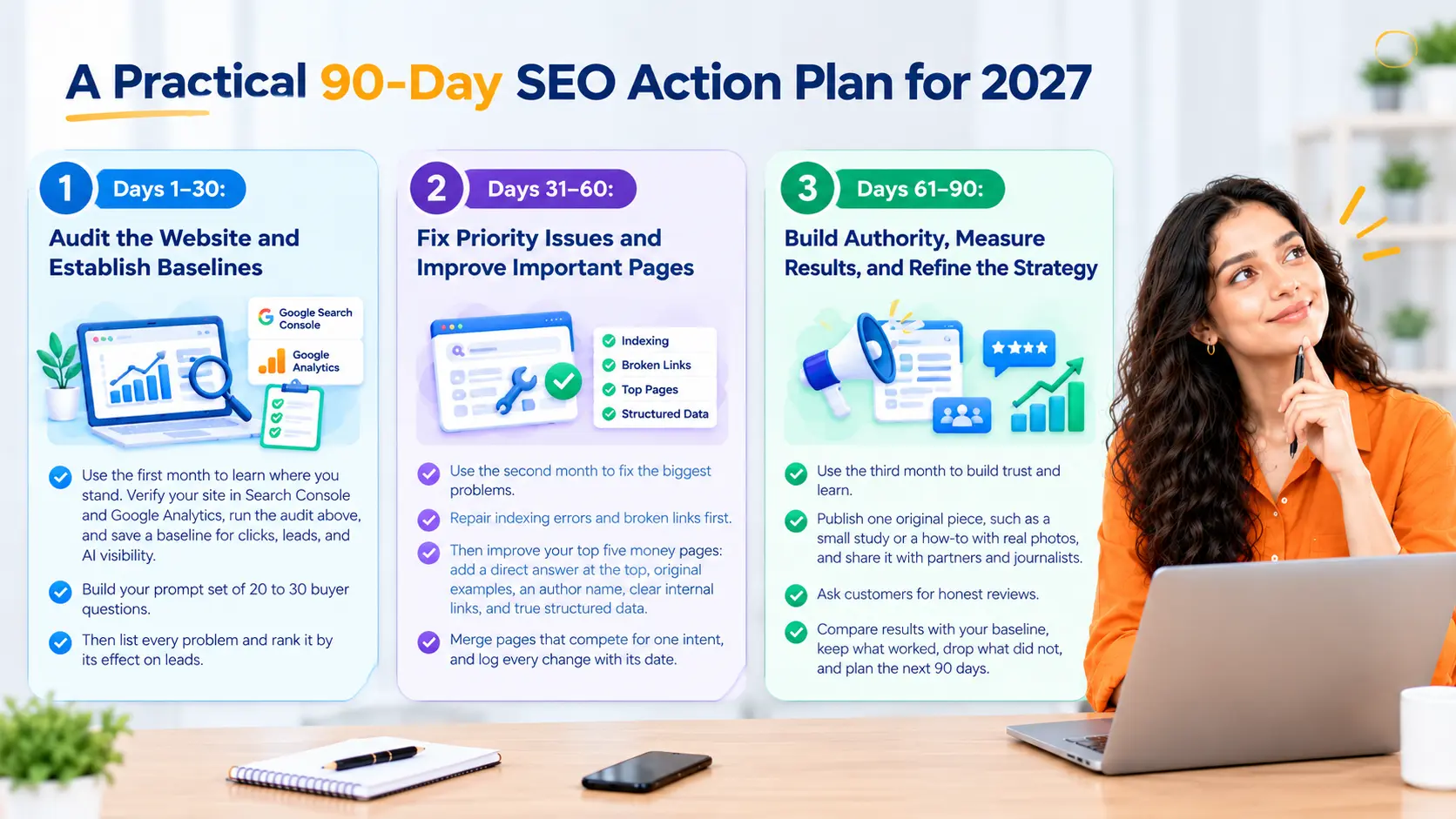
Spend 30 days on audit and baselines, 30 on fixes, and 30 on authority and review. Small steps in order beat big random changes.
Days 1–30: Audit the Website and Establish Baselines
Use the first month to learn where you stand. Verify your site in Search Console and Google Analytics, run the audit above, and save a baseline for clicks, leads, and AI visibility.
Build your prompt set of 20 to 30 buyer questions. Then list every problem and rank it by its effect on leads.
Days 31–60: Fix Priority Issues and Improve Important Pages
Use the second month to fix the biggest problems. Repair indexing errors and broken links first. Then improve your top five money pages: add a direct answer at the top, original examples, an author name, clear internal links, and true structured data. Merge pages that compete for one intent, and log every change with its date.
Days 61–90: Build Authority, Measure Results, and Refine the Strategy
Use the third month to build trust and learn. Publish one original piece, such as a small study or a how-to with real photos, and share it with partners and journalists. Ask customers for honest reviews. Compare results with your baseline, keep what worked, drop what did not, and plan the next 90 days.
Conclusion: Keep the Fundamentals, Change the Execution
Keep the fundamentals and change the execution. That is the heart of SEO best practices for 2027.
Crawlable pages, helpful content, clear structure, and real trust still win. What is new is how you measure success and where people find you. Track leads, not just rankings, to test your AI visibility each month, and break any habit of tricking systems.
This is our view, based on Google’s own guidance and the research linked above. AI search will keep changing, so treat what comes next as a prediction, not a promise. If you want help auditing your site against these steps, the team at Rankon Technologies is ready to help.
If you want to improve your website’s SEO and attract the right audience, get in touch with RankON Technologies. We’ll help you identify areas for improvement and find the right SEO approach to achieve your business goals.
FAQs About SEO Best Practices for 2027
Here are short answers to the questions people ask most about SEO best practices for 2027.
Is SEO Still Worth Investing in 2027?
Yes. Google says SEO best practices continue to apply because its AI features are rooted in its core Search ranking and quality systems. What changes is the goal. Aim for leads and brand trust, not clicks alone, and expect some informational clicks to drop.
Is GEO Different From Traditional SEO?
Not for Google Search. Google says optimizing for generative AI search is optimizing for the search experience, and thus still SEO. GEO is a useful word for tracking visibility in ChatGPT and Perplexity, but the work is the same: clear, original, trusted content on a site that can be crawled.
Does Structured Data Help Websites Appear in AI Search?
It helps Google understand a page, but it does not guarantee an AI citation. Google says no special schema is needed for AI search. Use markup that matches the visible text, because that keeps you eligible for rich results.
Can AI-Generated Content Rank on Google?
Yes, if it is helpful and original. Google does not ban AI content. It bans scaled content abuse, which means many pages made mainly to manipulate rankings, however they are made. Add expert review, real facts, and examples before you publish.
Why Is Organic Traffic Falling Even When Rankings Remain Stable?
The most common reason is that answers now appear on the results page, so fewer people click. Open Search Console. If impressions hold steady while click-through rate falls, that is the pattern. Pew found clicks fell from 15% to 8% of visits when an AI summary appeared. Season and lost rich results can also play a part.
How Can I Check Whether My Website Appears in AI Answers?
Use your fixed prompt set. Ask the same questions each month in Google AI Mode, ChatGPT, Gemini, and Perplexity, and note brand mentions and cited pages. Then open the Generative AI report in Search Console to see impressions. Answers vary by person and day, so look for patterns, not single results.
Should Businesses Prioritize SEO or GEO First?
SEO first, because the same base work serves both. Fix crawling, indexing, content quality, and trust. Then add AI visibility tracking on top. Do not pay for GEO tricks that Google says you can ignore, such as llms.txt files or fake mentions.
Sources
Google: AI features and your website · Google: Optimizing for generative AI features · Google: Spam policies · Google: Helpful, reliable, people-first content · Google Search Central Blog: Generative AI performance reports · Pew Research Center, July 22, 2025 · web.dev: Core Web Vitals thresholds