
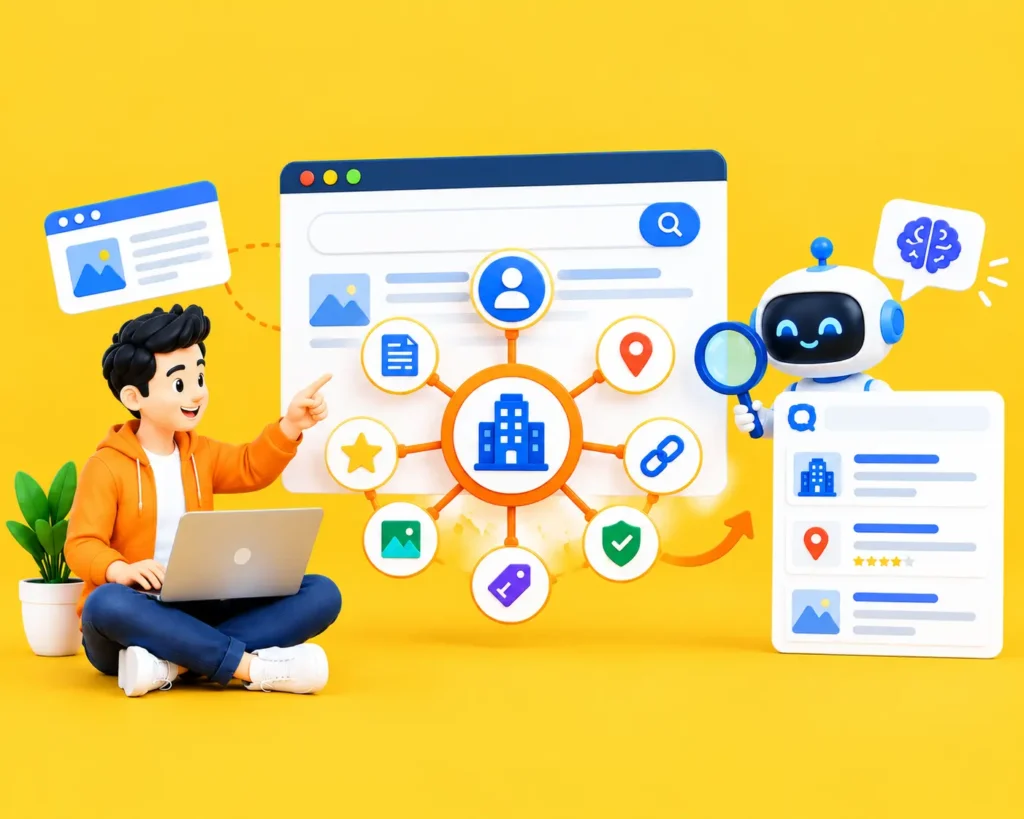
What is entity SEO? It is the practice of helping search engines and AI tools recognize your brand as a clear, real thing, not just words on a page. A real thing has a name, a website, a place, services, and people.
When these facts are clear and match everywhere, machines can trust them more. This guide explains the idea in plain words and shows what to do next.
We wrote this for business owners, SEO professionals, content writers, and agency teams. You will learn what an entity is, how Google and AI tools use entities, and how to build a strong brand entity step by step.
“We also keep Google’s official guidance separate from industry opinion. No one can promise rankings or AI citations, and this article does not.”
Quick Answers:
- An entity is a clearly identifiable thing, such as a company, person, product, place, or idea.
- Entity SEO makes your brand easy for machines to identify, describe, and connect to related things.
- Google says there is no special markup or extra requirement for AI Overviews and AI Mode. Clear, helpful content and strong SEO basics still apply.
- Consistent facts, helpful pages, and independent mentions are what build a brand entity over time.
What Is Entity SEO? A Simple Definition
What is entity SEO in one line?
“Entity SEO is the work of making your brand, people, products and topics easy for machines to identify, describe and connect.”
Old SEO often asked which keywords a page should target.
Entity SEO also asks whether search systems know exactly who you are and what you do. The goal is clarity, and clear facts lead to better understanding.
Think of a keyword as a word and an entity as a thing. The word “Apple” can refer to a fruit or a technology company. Search systems need to know which one a page talks about. Entity SEO gives them that answer through clear writing, consistent facts, and structured data.
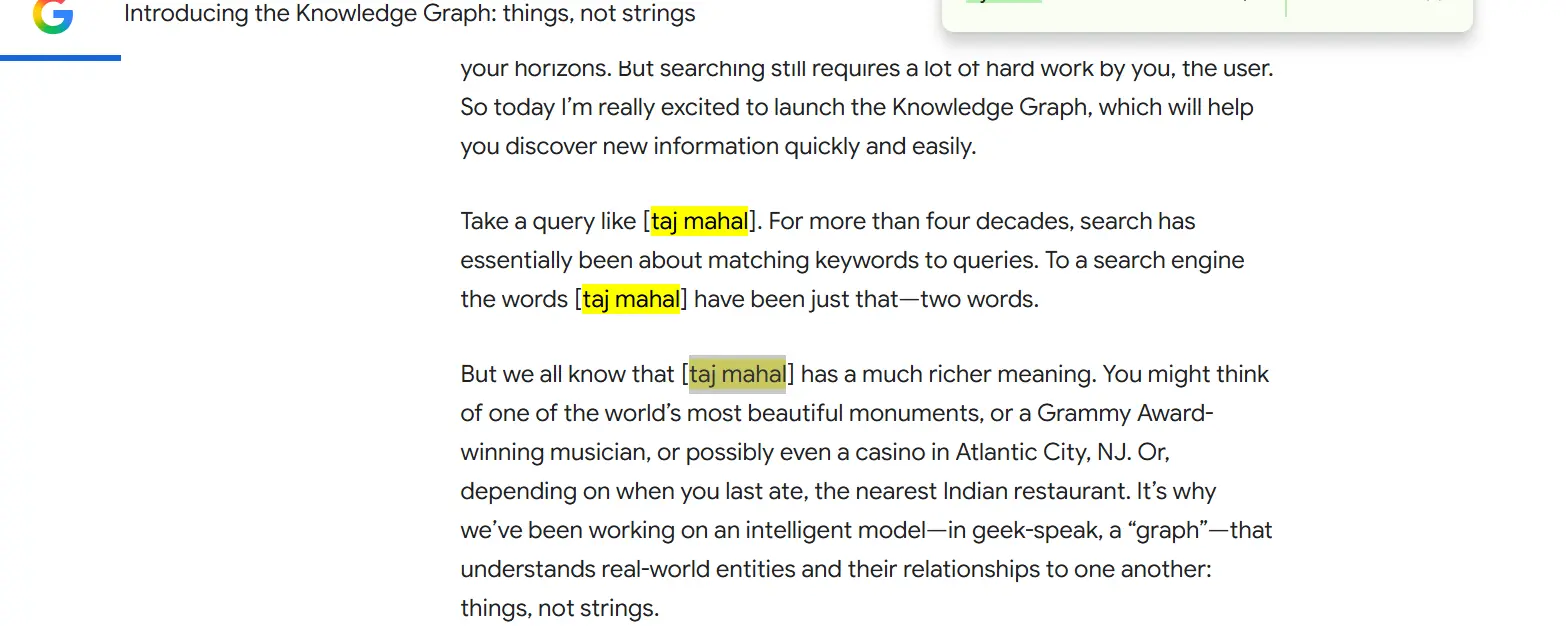
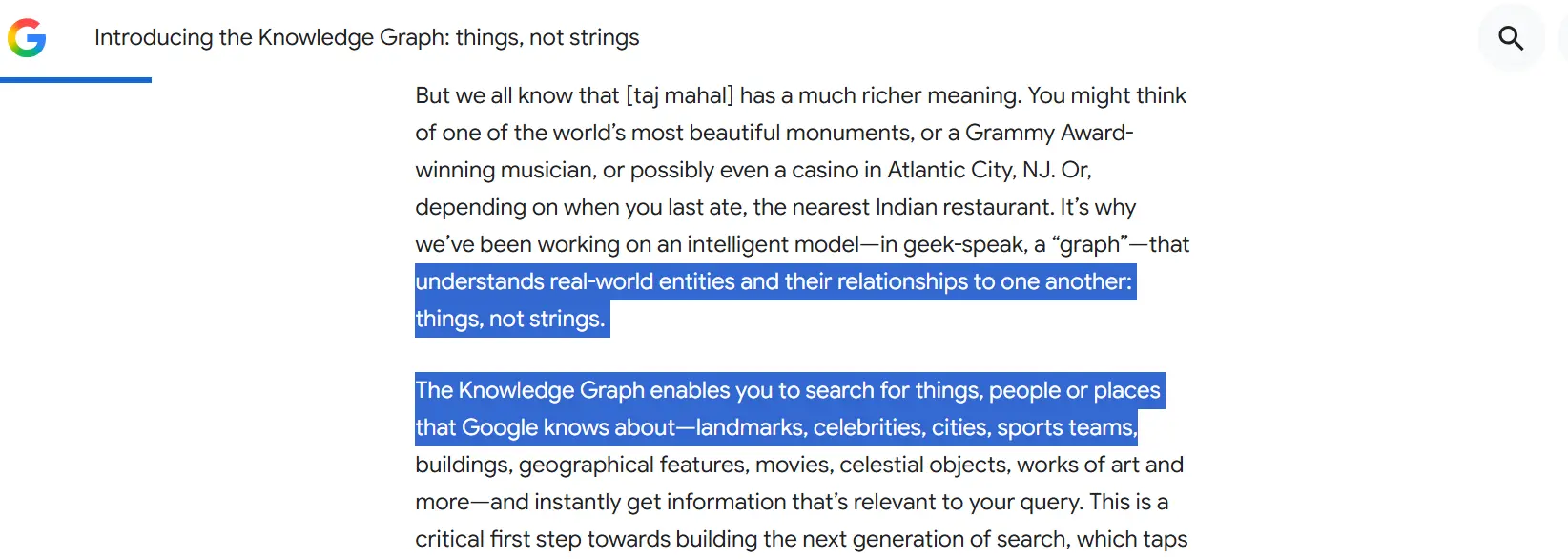
Google explained this idea in 2012 when it launched the Knowledge Graph. In its launch post, Google used the query Taj Mahal. That phrase can mean a monument, a musician, or a casino. Google described the goal as understanding real-world entities and how they relate to each other, or things, not strings.
In the screenshot below 👇, Google explains that the same keyword, such as ‘Taj Mahal’, can have different meanings depending on the context. This shows why Google needs to understand entities and their relationships, not just match keywords.
In this other screenshot👇, Google introduced its understanding of real-world entities and their relationships through the Knowledge Graph in 2012. As we can see, Google focused on understanding things, people, and places rather than just matching strings of text.
That post also gave numbers from 2012. Google said the Knowledge Graph held more than 500 million objects and more than 3.5 billion facts about them. It said the graph drew on public sources such as Freebase, Wikipedia, and the CIA World Factbook. Those figures are a 2012 snapshot, and the post does not give a current size.
What Is an Entity?
An entity is a distinct thing that can be named, described, and linked to other things. Common types include people, organizations, places, products, events, and ideas. Each entity has attributes, such as a name or address. Each entity also has relationships, such as who founded it or what it sells.
Here is a simple table view of how a digital marketing agency becomes an entity. The facts below come from the public RankON Technologies website.
Part of the entity | Example |
Entity type | Organization, a digital marketing agency |
Name | RankON Technologies |
Official website | www.rankontechnologies.com |
Services it offers | SEO, AI SEO, AEO, GEO, PPC, social media marketing, web development, online reputation management |
Location | India |
Related profiles | LinkedIn, Instagram, Facebook, Twitter, Quora, Reddit, Clutch, Upwork, Google Partners directory |
Each row is a fact a machine can check. When the same facts appear in many trusted places, the entity becomes clearer. When facts clash, the entity becomes blurry. Entity SEO is the work of keeping these facts clean.
What Is Entity SEO Not?
What is entity SEO not? It is not a trick, a plugin, or one special tag that forces Google to list your brand. It is also not the same as keyword research, although the two work together. Finally, it is not a promise of a Knowledge Panel, because Google decides when to show one.
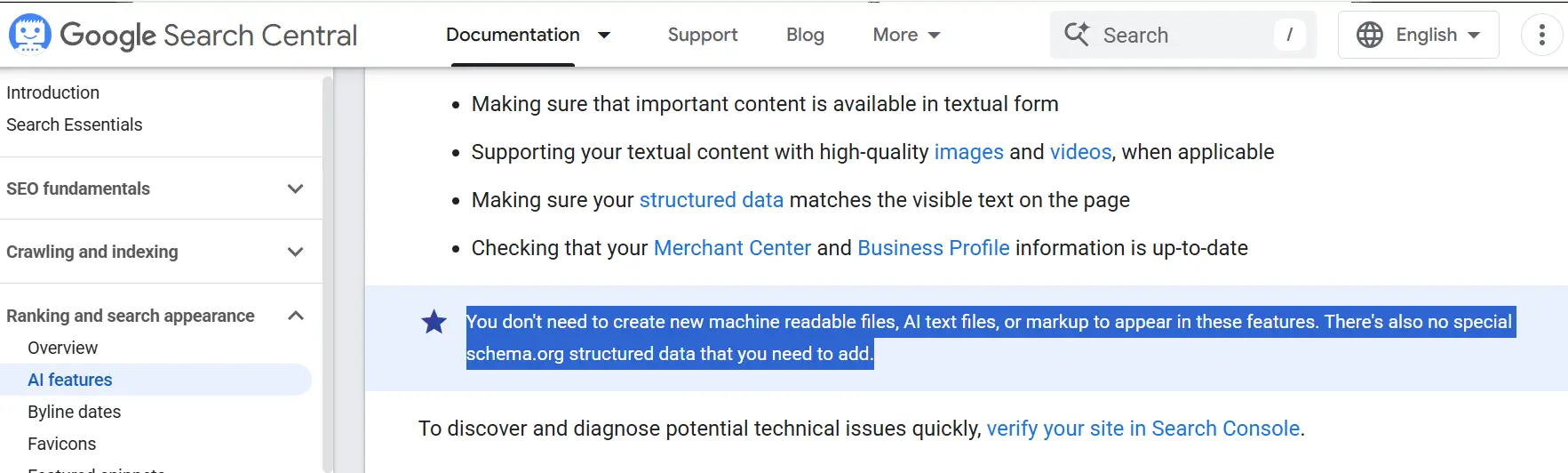
Many people think schema markup alone creates an entity. It does not. Google’s page on AI features and your website say there is no special schema.org markup needed for AI Overviews or AI Mode. Schema helps describe facts, but the facts must already be true, visible, and consistent.
In the below real screenshot of Google search central: Google says👇
Why Does Entity SEO Matter for Your Brand in AI Search?
Entity SEO matters because AI search tools build answers from many sources, and they need to know which brand is which. If your brand is unclear, a tool can mix it up with a similar name or skip it. If your brand is clear, the tool has an easier job describing you correctly. Clear brands are simply easier to understand.
Google says its AI features can use a technique called query fan-out. According to the same Search Central page, the system issues several related searches across subtopics and data sources to build a response. One question can turn into many smaller questions. Your brand needs useful, clear answers across those smaller topics.
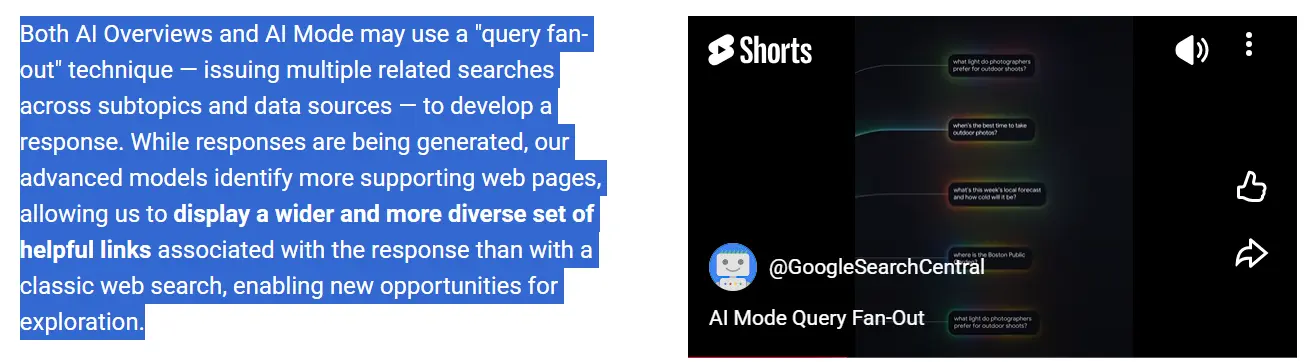
Here is an illustration, not a real log. Someone asks an AI tool which SEO agency suits a small startup. The tool may look at what the agency does, where it works, what clients say, and what the pricing model is. A brand with clear service pages, matching profiles, and independent reviews gives the tool more to work with.
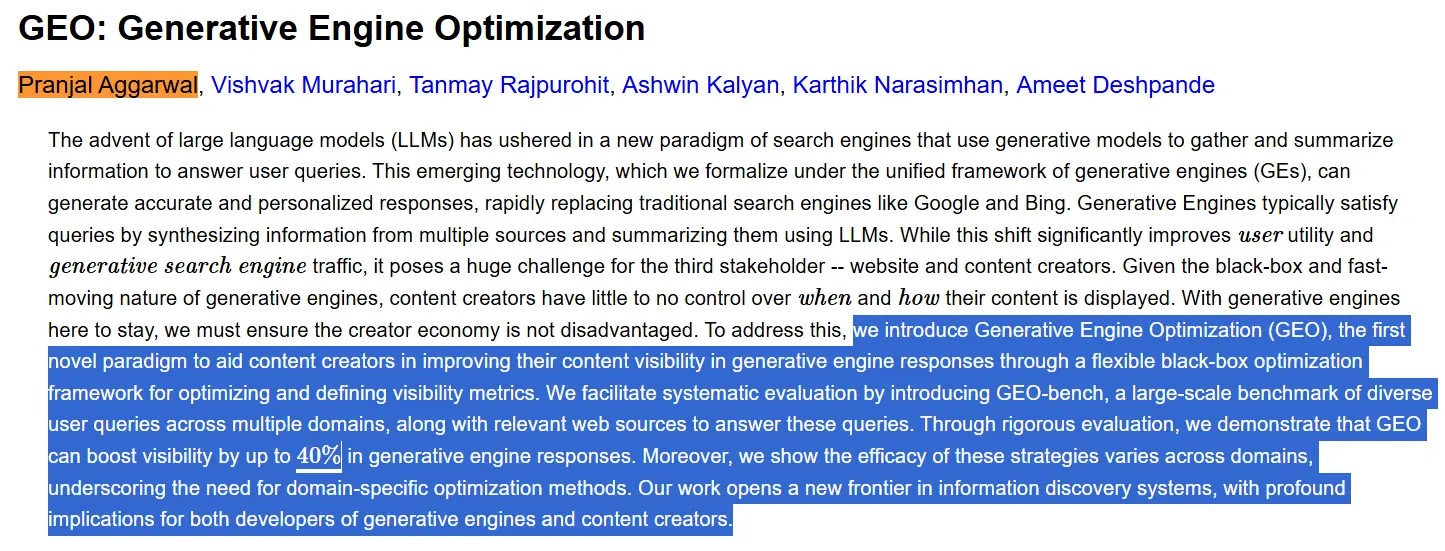
There is also research behind the wider idea of optimizing for generative engines. A 2023 paper titled GEO: Generative Engine Optimization, by researchers including Pranjal Aggarwal, reported visibility gains of up to 40 percent in generative engine responses on its benchmark. The authors also found that results vary by domain. This is a research result on a test benchmark, so it does not guarantee any outcome for your site.
Google also states that AI Overviews appear only when its systems decide they add value beyond classic Search, so they often do not trigger. This means entity work should not depend on one AI feature. Strong entity signals help in classic search, in knowledge panels, in local results, and in AI answers. That wider benefit is the real argument for doing this work.
How Do Search Engines Understand Entities?
Search engines understand entities by finding names in text, determining which real thing each name refers to, and linking facts about that thing. The first step is often called entity recognition.
The second step is disambiguation, which means choosing the right meaning. The third step connects entities, which is why entity relationships matter.
Machines collect these facts from many places. Your own website is the main source you control. Structured data, business profiles, and independent websites add more evidence.
Public databases such as Wikidata add structured facts for some entities. Good entity SEO covers every one of these sources.
Signal | Where it lives | What it tells machines |
Website text | Home, About, and Service pages | Who you are and what you offer |
Structured data | JSON-LD on your pages | Name, logo, address, official profiles |
Business profiles | Google Business Profile, LinkedIn, Clutch | Matching facts from another source |
Independent mentions | News, reviews, directories | Proof that others recognize you |
Public knowledge bases | Wikidata, Wikipedia | A stable identity, if your brand qualifies |
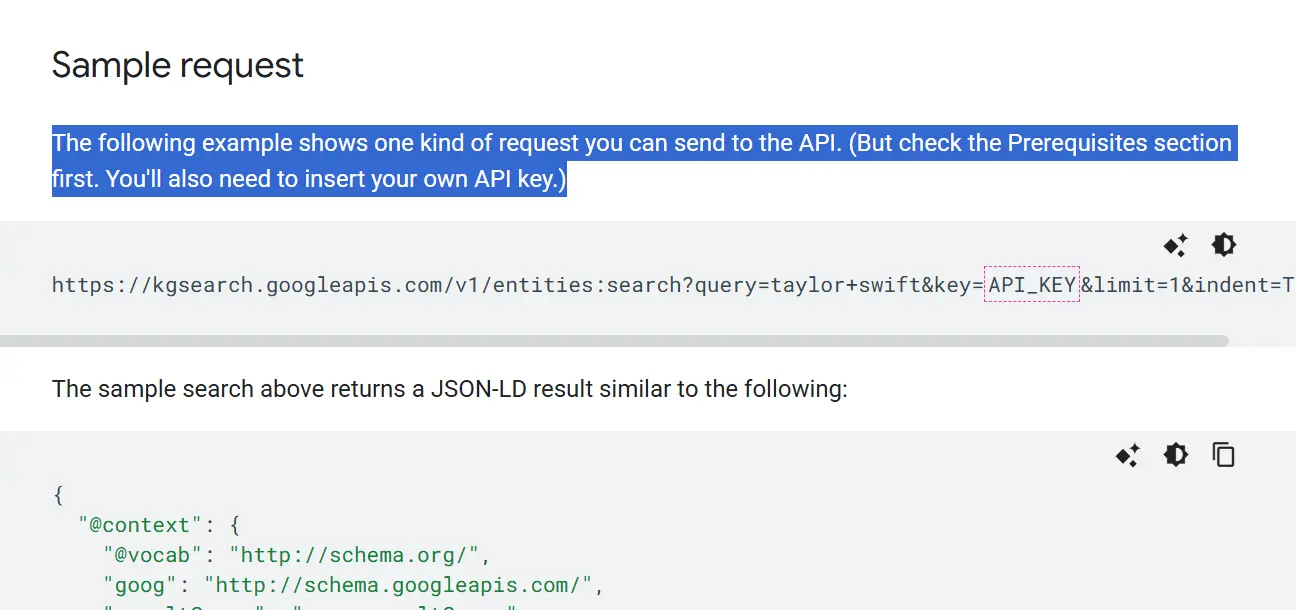
You can also look at how Google sees an entity. The Knowledge Graph Search API lets you search for entities in Google’s graph. According to Google, it uses standard schema.org types and returns JSON-LD. You need an API key to use it, and not every brand will appear in the results.
How to Build a Strong Brand Entity: 7 Steps
You build a strong brand entity by stating the same clear facts in many trusted places and backing them with helpful content. The steps below are our recommendations.
They follow Google’s published guidance where it exists, and we mark where it does not. Treat them as a simple entity SEO strategy that any team can start this week.
Step 1: Write your entity fact sheet
Start with a one-page document containing your brand’s key details. This will help keep your information consistent across your website, profiles, and structured data.
Include:
- Brand name: Your official and commonly used name.
- Legal name: Your registered business name, where applicable.
- Website: Your official domain.
- Description: A short, clear explanation of what your business does.
- Business details: Address and contact information, where applicable.
- Key people: Founders and relevant team members.
- Services: Your main products or services.
- Official profiles: LinkedIn, Clutch, Upwork, and other genuine profiles.
Choose one consistent spelling of your brand name and one clear description. Use this fact sheet as your reference for the remaining steps.
Step 2: Make your home and About pages clear
Your homepage and About page should quickly explain who you are and what your business does.
Make sure these pages:
- State your brand name and business description clearly near the beginning.
- Explain your main services and who they help.
- Link naturally to relevant service pages.
- Use consistent business information.
- Provide clear details about your experience and team where appropriate.
For example, our About Us page demonstrates the type of page where a business can explain its identity and background.
In the screenshot below👇, Anand is clearly identified as the Founder and Director of RankON Technologies. The About Us page includes his author profile, description, image, and areas of expertise, particularly PPC and Google Ads.
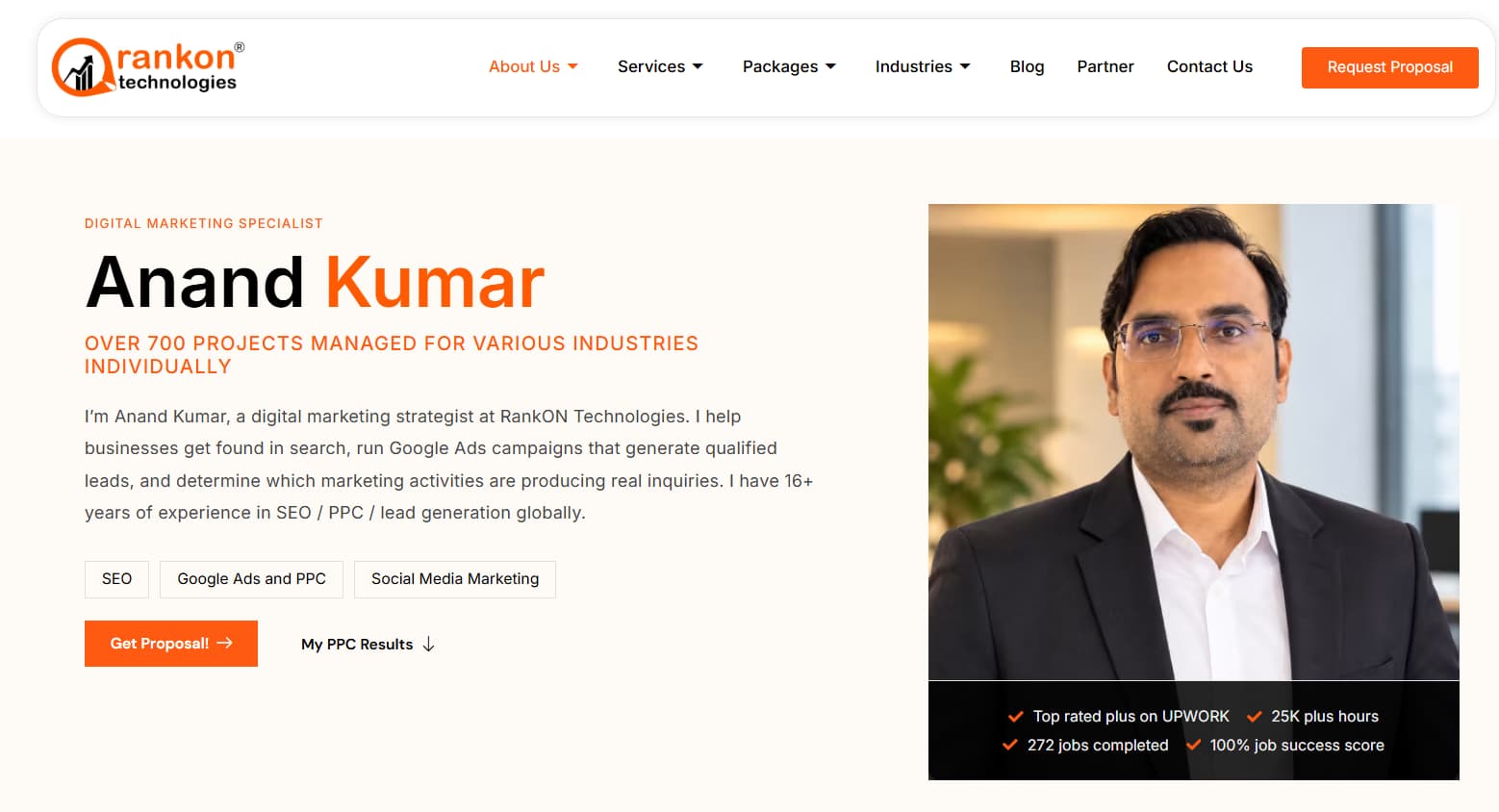
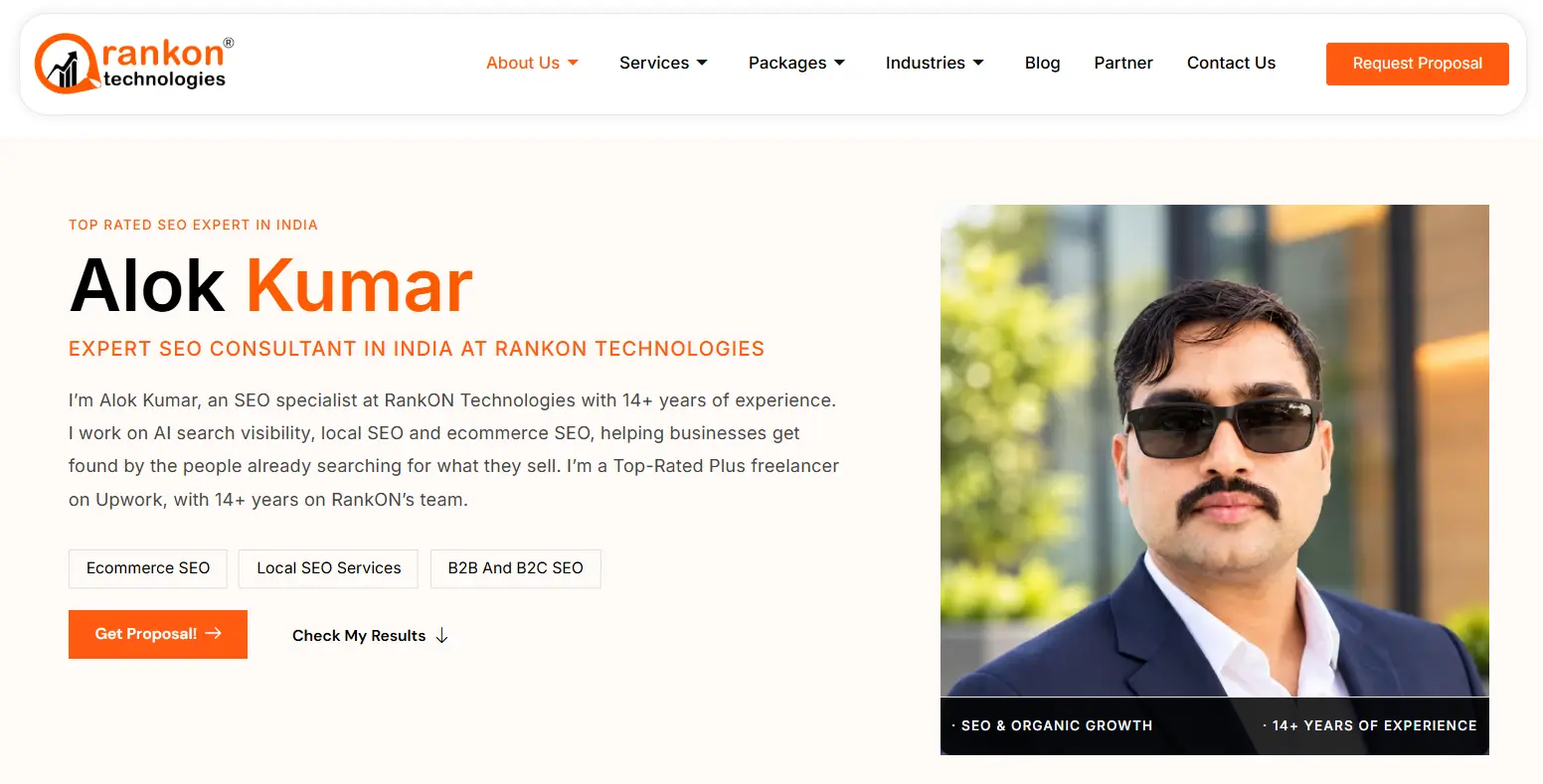
In the screenshot below👇, In the screenshot below, Alok Kumar is identified as an SEO specialist at RankON Technologies with 14+ years of experience. His author profile highlights his expertise in AI search visibility, local SEO, and e-commerce SEO, as well as his Upwork Top Rated Plus status.
Step 3: Add Organization structured data
Organization structured data helps search engines understand important details about your company in a machine-readable format.
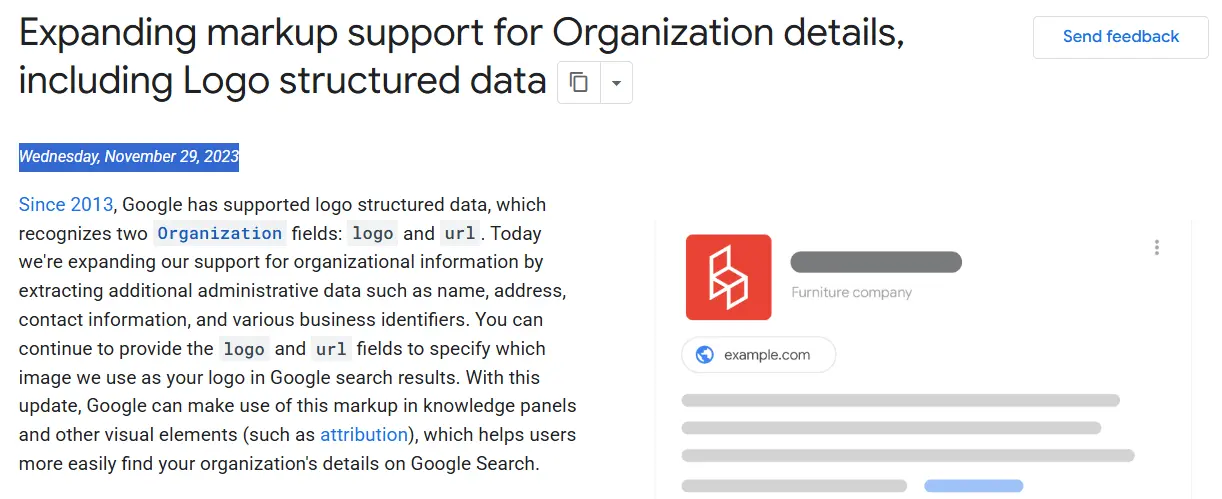
In November 2023, Google announced expanded support for Organization markup. Google explained that this markup can help it understand details such as your business name, address, contact information, and identifiers.
To implement it correctly:
- Add suitable Organization structured data to your homepage or another appropriate page.
- Include accurate properties that apply to your business.
- Make sure the structured data matches the information visible on your website.
- Use the sameAs property to reference genuine official profiles where appropriate.
- Test the markup and check for errors.
Read Google’s current Organization structured data documentation before implementation.
Important: Structured data helps clarify your business information, but it does not guarantee rankings or a Google Knowledge Panel.
Step 4: Match your profiles and use the same As
Your profiles on other sites should say the same things as your website.
This includes LinkedIn, Clutch, Upwork, social networks and, for local businesses, your Google Business Profile. Google tells site owners to keep their Business Profile information up to date. Mismatched names, old addresses, and old phone numbers create doubt.
Schema.org defines sameAs as the URL of a reference web page that clearly shows the item’s identity, such as a Wikipedia page, a Wikidata entry, or an official website.
In the screenshot below👇, RankON Technologies’ Organization schema includes the sameAs property, linking the brand entity to its official Facebook, X, YouTube, and Instagram profiles.This helps search engines identify the brand’s official social profiles.
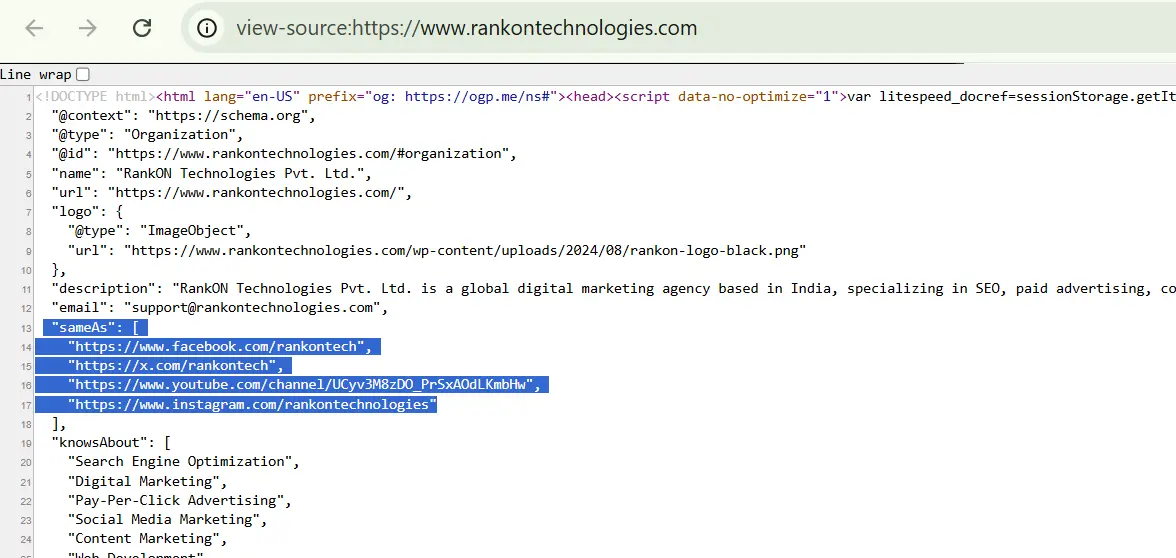
In plain words, it says this other page is about the same thing. Add only pages that really describe your brand.
Step 5: Build topic and service relationships with content
Entities connect through content. A page about technical SEO should link to related pages about on-page SEO and local SEO, and vice versa. This tells readers and crawlers how your services relate. Google also lists internal links as a way to make content easy to find.
For example:
A reader learning about entities may next want to understand EEAT in SEO or how our team approaches Technical SEO services and On-Page SEO services. Local businesses can go to Local SEO. Use descriptive anchor text like this, and link only when the page helps.
Step 6: Answer the related questions people ask
Fan-out means one question becomes many. So a good page answers the main question first and then covers the related questions around it.
For a topic like entity SEO, these include:
- What is an entity?
- How does schema markup help?
- How do you measure progress?
- What mistakes should you avoid?
Put the short answer first in each section so the answer stands on its own.
To delve deeper into the broader shift, our guide to AI SEO services, including AEO and GEO, explains how these terms relate. If you want to know whether a file like llms.txt matters, read What is llms.txt. Remember that Google says you do not need new machine-readable files or AI text files to appear in its AI features.
Step 7: Earn independent mentions, and be careful with Wikidata
Independent sources make your entity more believable.
- Real customer reviews
- Press coverage
- Industry directories
And case studies all help people and machines confirm who you are. You can show proof on your own site too, such as a Reviews page and Case Studies. The proof must be real and checkable.
Wikidata and Wikipedia need more care. Wikidata’s help pages say items must meet its notability criteria and that items should not be created for promotional purposes. If your brand does not qualify, do not force it. Focus on earning real coverage first.
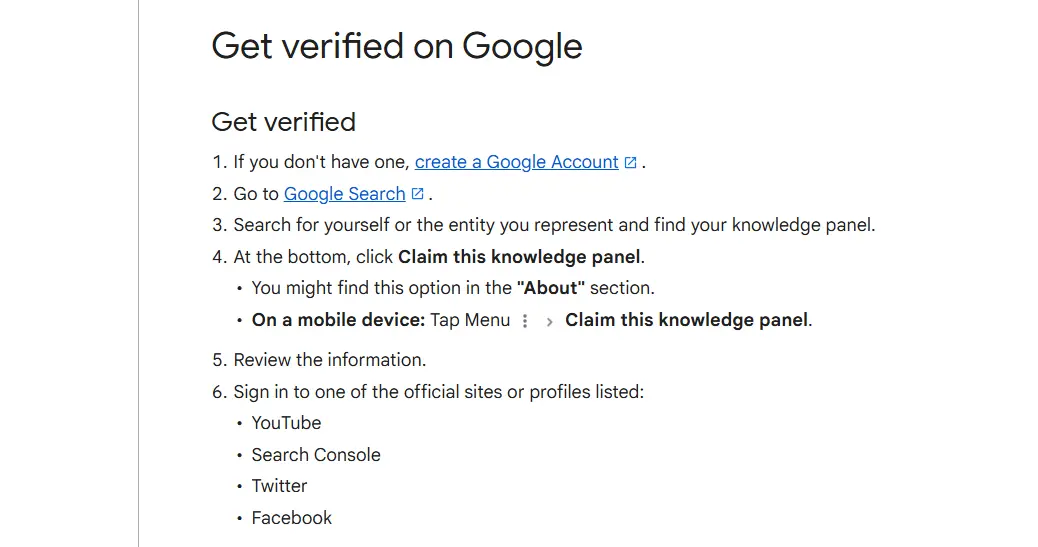
If a Google Knowledge Panel for your brand exists, Google offers a verification process so you can claim it and suggest changes. Eligibility rules apply, and Google does not promise that any brand will get a panel.
Which Schema Markup Supports Entity SEO?
Organization is the most useful schema type for a brand entity, and it usually belongs on the home page. Other types support it by describing specific things on specific pages.
Choose a type only when the page truly shows that information. Good entity SEO uses schema to confirm facts, never to invent them.
Schema type | Use it for | Where to place it |
Organization | Brand name, logo, URL, contact details, official profiles | Home page |
LocalBusiness | A business with a physical location or service area | Home or location pages |
Person | Founders, authors, and experts | Author or team pages |
Article or Blog Posting | Blog content with a clear author and dates | Each article |
Product | Items sold on an e-commerce site | Product pages |
Keep two rules in mind. First, markup must match what people can see on the page. Second, markup does not replace clear writing.
Google confirms that no special schema is needed for its AI features, so treat schema as a clean way to state facts, not as a shortcut.
What Does Entity SEO Look Like in Practice?
Entity SEO in practice means choosing one clear identity and repeating it with care. The two examples below are labeled so you know what is real and what is an illustration. Both show the same lesson. Small, steady entity SEO habits beat big one-time projects.
Example 1: A made-up bakery (illustration only). Sweet Crumb Bakery is a pretend business. Its website, Google Business Profile, and social pages all say Sweet Crumb Bakery.
Its home page carries Organization markup with the same address and phone number. A machine now sees one steady identity instead of three slightly different ones.
Example 2: A name check on a real site (observation, not an audit). On the public RankON Technologies website, the brand appears in several forms.
The page title and body text use RankON Technologies, while the site name in page metadata reads Rankon Technologies Pvt Ltd. Both are close, but a name fact sheet would settle which form is the main one. This takes minutes to check and costs nothing to fix.
The same website also links to a Google Partners directory listing, a Clutch profile, an Upwork agency page, and several social profiles.
Those are the kinds of third-party pages that could be listed in sameAs, as long as each one accurately describes the brand.
We have not checked the content of each profile, so treat this as a starting list, not a finished review.
What Are the Most Common Entity SEO Mistakes?
The most common mistake is changing the brand name or facts from one page to the next.
Fix it with the fact sheet from Step 1. The other mistakes below follow the same pattern: unclear facts and misdirected effort. Avoiding them is half of good entity optimization.
- Using many name variations. Pick one form and use it everywhere you control.
- Adding schema without matching visible text. Google says structured data should match the page, so keep them in sync.
- Adding sameAs links to weak or unrelated pages. Only link pages that clearly describe your brand.
- Creating a Wikidata or Wikipedia entry for promotion. Notability rules apply, and promotional items can be removed.
- Buying mentions or reviews. Fake or bought proof harms trust and can violate Google’s spam policies.
- Writing thin pages that name the entity but say nothing useful. A page must help a reader first.
- Expecting a fixed result. No guide can promise a Knowledge Panel, a ranking, or an AI citation.
How Can You Measure Entity SEO Progress?
You can measure entity SEO progress with Google Search Console, brand search checks, and a few repeatable manual tests.
There is no single entity score from Google, so use several small signals together. Track them monthly and keep notes.
- Search Console. Google says sites that appear in AI Overviews and AI Mode are included in the overall search traffic in Search Console. They are reported in the Performance report under the Web search type. Watch brand queries, impressions, and clicks over time.
- Brand search check. Search your exact brand name on Google. Look at the results, any knowledge panel, and any wrong facts.
- Knowledge Graph lookup. Use the Knowledge Graph Search API to see whether Google lists your entity and how it is described.
- Prompt tests. Ask ChatGPT, Gemini, and Perplexity a few fixed questions about your brand. Save the answers each month. Compare them for accuracy, not for a rank, because AI answers can change from one run to the next.
What Is Entity SEO Without the Hype? What Most Guides Leave Out
What is entity SEO when you remove the hype? It is a long-term clarity project built on solid SEO basics, and several popular claims have limits.
The table sorts common claims by the strength of the evidence supporting them.
Claim | What the evidence says | Type of source |
Schema alone makes AI tools cite you | Google says no special schema is needed for AI Overviews or AI Mode | Google documentation |
You need an AI text file | Google says no new machine-readable or AI text files are needed to appear in its AI features | Google documentation |
Google understands things, not only words | Google described this goal when it launched the Knowledge Graph | Google blog, 2012 |
Optimization can raise visibility in generative engines | A benchmark study reported gains of up to 40 percent, and results varied by domain | Research paper |
Consistent facts across sites build a stronger entity | This is a widely shared practitioner view, and it follows from how Google describes using Organization data | Industry view and our recommendation |
Here are the angles that many guides skip:
- Official versus opinion. Many articles mix the two. We label each claim so you can judge it.
- Notability limits. Not every brand can have a Wikidata item or Knowledge Panel, and that is fine.
- People entities. Founders and authors are entities too, and strong author pages support trust.
- Name hygiene. A small spelling difference across profiles is easy to fix and easy to miss.
- Measurement honesty. There is no perfect entity metric, so we suggest repeatable checks instead.
Conclusion:
Entity SEO means making your brand easy to recognize and describe, so search engines and AI tools can place it correctly. That is why entity SEO for brands matters more as AI answers grow. Start with a fact sheet, keep your name and details the same everywhere, add Organization markup that matches your page, and build helpful content around your services. Then earn real mentions over time.
Google’s own guidance keeps the message simple. Strong SEO basics and helpful, people-first content still matter most, and no special trick is needed for AI features. If you would like help reviewing your brand entity, our team offers SEO services. You can contact RankON Technologies to start the conversation.
Frequently Asked Questions About Entity SEO
What is entity SEO?
Entity SEO is the practice of making your brand, people, products, and topics clear and connected for search engines and AI tools. It focuses on facts and relationships, not only keywords. The aim is for machines to identify you correctly. You may also hear it called entity-based SEO or entity optimization.
Is entity SEO the same as semantic SEO?
No, they overlap, but they are not the same. Semantic SEO is the wider practice of covering the meaning of a topic. Entity SEO focuses on the specific things in that topic and on how they connect. This is our way of explaining the difference, not an official Google definition.
Does schema markup create an entity?
No. Schema markup describes facts that already exist on your page. It can help Google read details such as your name, logo, and address, as explained in Google’s 2023 Organization announcement. But Google says no special schema is needed for its AI features.
Do I need Wikipedia or Wikidata for entity SEO?
No. They can help brands that meet the notability rules, but they are not a requirement. Wikidata states that items should not be made for promotion. Start with your website, your profiles, and real independent coverage.
How do I get a Google Knowledge Panel?
You cannot force one. Google decides when a panel appears. If one already exists for your brand, you can use Google’s verification process to claim it and suggest edits.
Does entity SEO help with AI Overviews and AI Mode?
It can support the same basics Google recommends, such as clear, helpful, well-linked content and accurate business information. Google says there are no extra requirements for these features, and that a page must be indexed and eligible to show with a snippet. So entity work supports your chances, and it does not guarantee a mention.
How long does entity SEO take?
There is no fixed time. It depends on your starting point, your competition, and how often search systems re-check your pages. Google also notes that crawling can take anywhere from several days to several months, depending on the page. Track progress monthly instead of expecting a date.
Is entity SEO useful for small businesses?
Yes. A small business can fix its name, profiles, and service pages at little cost. For local businesses, an accurate Google Business Profile is a strong first step. Entity-based SEO rewards clarity more than budget.
Sources and References
Introducing the Knowledge Graph: things, not strings
Expanding markup support for Organization details,