
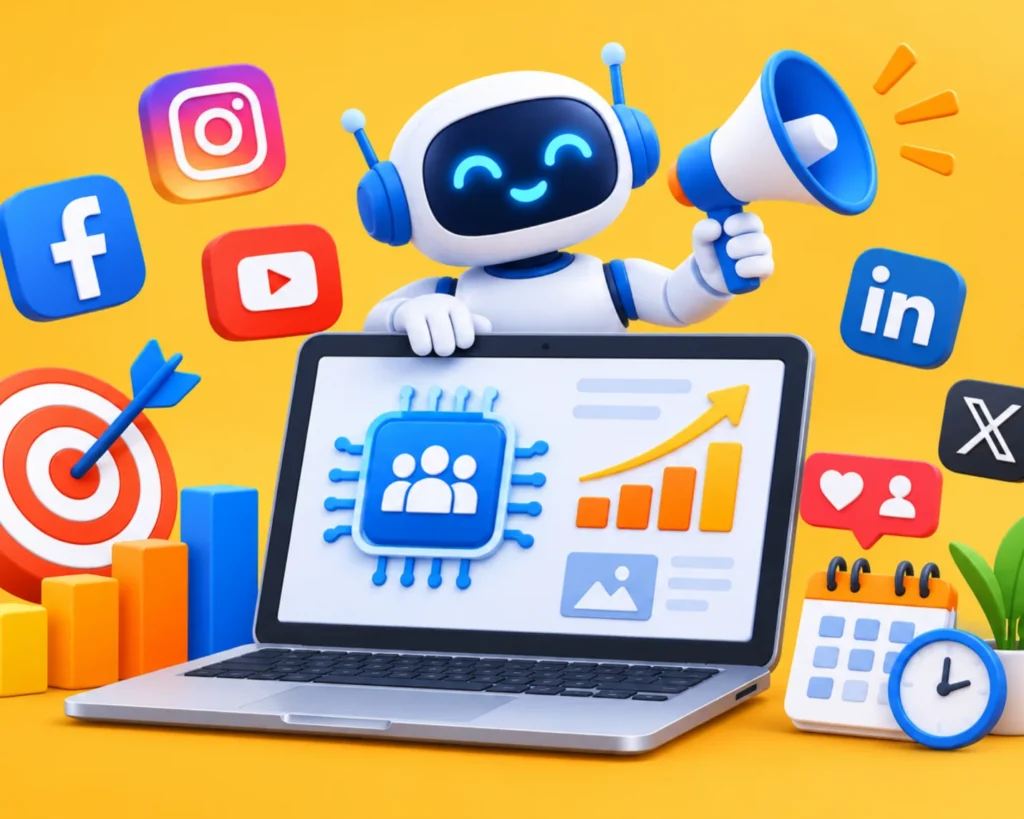
Artificial Intelligence (AI) is changing the way businesses approach social media marketing. From creating engaging content and designing promotional graphics to analyzing audience behavior and optimizing advertising campaigns, AI has introduced new possibilities for marketers and businesses.
Over the years, I have seen digital marketing evolve significantly. Social media marketing, in particular, has moved beyond simply publishing posts and responding to comments. Today, businesses need to understand their audiences, create relevant content, analyze performance, and continuously improve their marketing strategies to stay competitive.
AI is making many of these activities faster and more efficient.
At RankON Technologies, I believe AI can play an important role in helping businesses improve their digital marketing activities. However, adopting AI tools without a proper strategy does not automatically translate into better engagement, leads, or revenue.
The real opportunity lies in combining AI technology with human creativity, marketing expertise, and a clear understanding of business objectives.
In this article, I will explain how AI is transforming social media marketing, which tools businesses can use, the benefits and potential risks, and the best practices I recommend for achieving meaningful results.
What Is AI in Social Media?
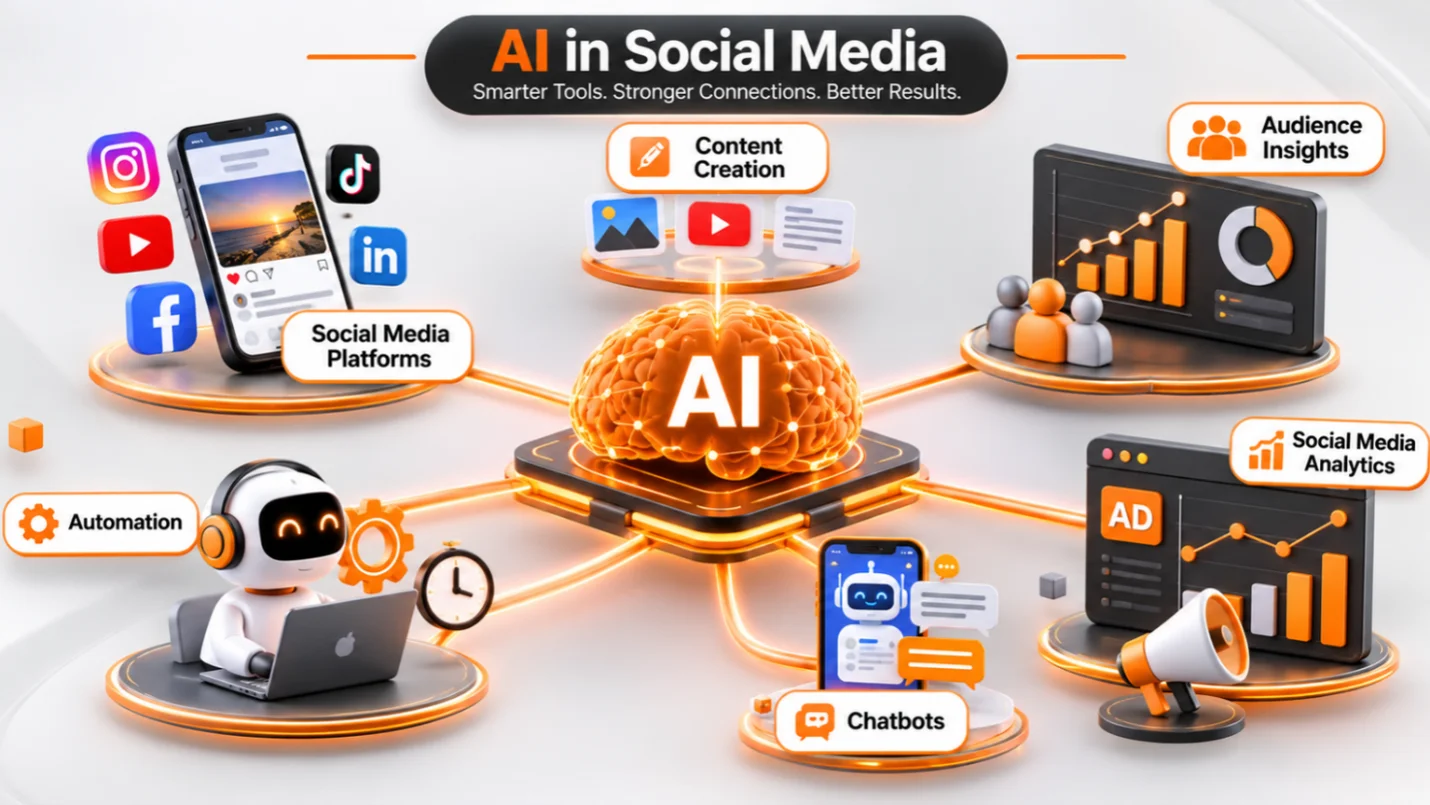
AI in social media refers to the use of artificial intelligence technologies to automate, improve, and optimize different social media activities.
These technologies include machine learning, natural language processing, predictive analytics, computer vision, and generative AI.
Social media platforms use AI to understand user behavior, recommend relevant content, identify interests, and personalize advertising experiences.
Businesses can also use external AI-powered tools to simplify their marketing activities.
For example, I see several practical applications of AI in social media marketing:
- Generating social media content ideas and captions.
- Creating images, videos, and promotional graphics.
- Analyzing audience behavior and engagement patterns.
- Identifying trending topics and relevant hashtags.
- Scheduling and managing social media posts.
- Automating responses to common customer inquiries.
- Monitoring brand mentions and customer sentiment.
- Analyzing advertising campaigns and marketing performance.
The important thing to understand is that AI is not just a content-generation technology. It can support almost every stage of a social media marketing strategy.
How Is AI Changing Social Media Marketing This Year?
In my view, one of the biggest changes AI has introduced is the shift from manual, time-consuming marketing activities to more automated, data-driven processes.
Earlier, social media teams had to spend considerable time researching topics, preparing captions, designing graphics, scheduling posts, and analyzing campaign performance.
Today, AI can assist with many of these activities.
Here are the major areas where I see AI making a difference.
1. AI-Powered Social Media Content Creation
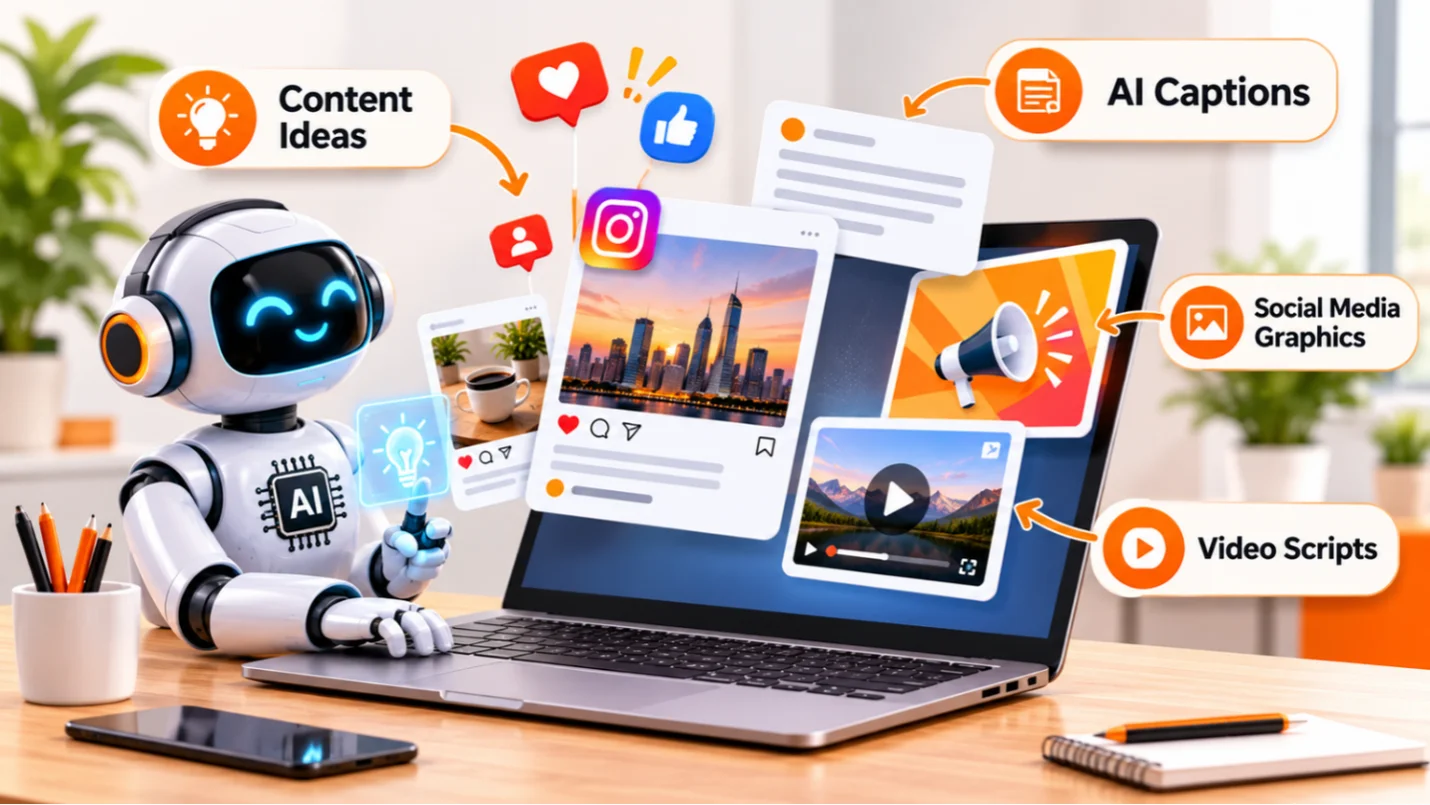
Content creation is one of the most useful applications of AI in social media marketing.
Tools such as ChatGPT and Jasper can help marketers generate post ideas, write captions, develop promotional messages, and create video scripts.
For example, if I am planning a social media campaign for a digital marketing agency, I can use AI to generate:
- Educational posts about SEO and digital marketing.
- LinkedIn content targeting business owners.
- Instagram captions promoting marketing services.
- Short-form video scripts for Reels and YouTube Shorts.
- Informative posts explaining industry trends.
This can significantly reduce the time required to prepare initial content drafts.
However, I do not recommend publishing AI-generated content without reviewing it.
AI can generate grammatically correct content, but it does not always understand a brand’s positioning, audience expectations, or communication style.
I believe the best results come when marketers use AI as an assistant and apply their own experience to make the content more relevant, original, and engaging.
2. Personalized Social Media Marketing
People interact with social media content based on their interests, preferences, and online behavior.
AI helps platforms analyze these interactions and recommend content that users are more likely to find relevant.
Businesses can also use audience insights to create more personalized marketing campaigns.
For example, a fitness brand can develop different campaigns for:
- People interested in weight management.
- Professional athletes.
- Beginners looking for fitness guidance.
- People interested in healthy eating.
Instead of delivering the same promotional message to everyone, marketers can create content that addresses different audience requirements.
In my opinion, understanding the target audience should always come before selecting an AI tool or creating a campaign.
3. Social Media Scheduling and Automation
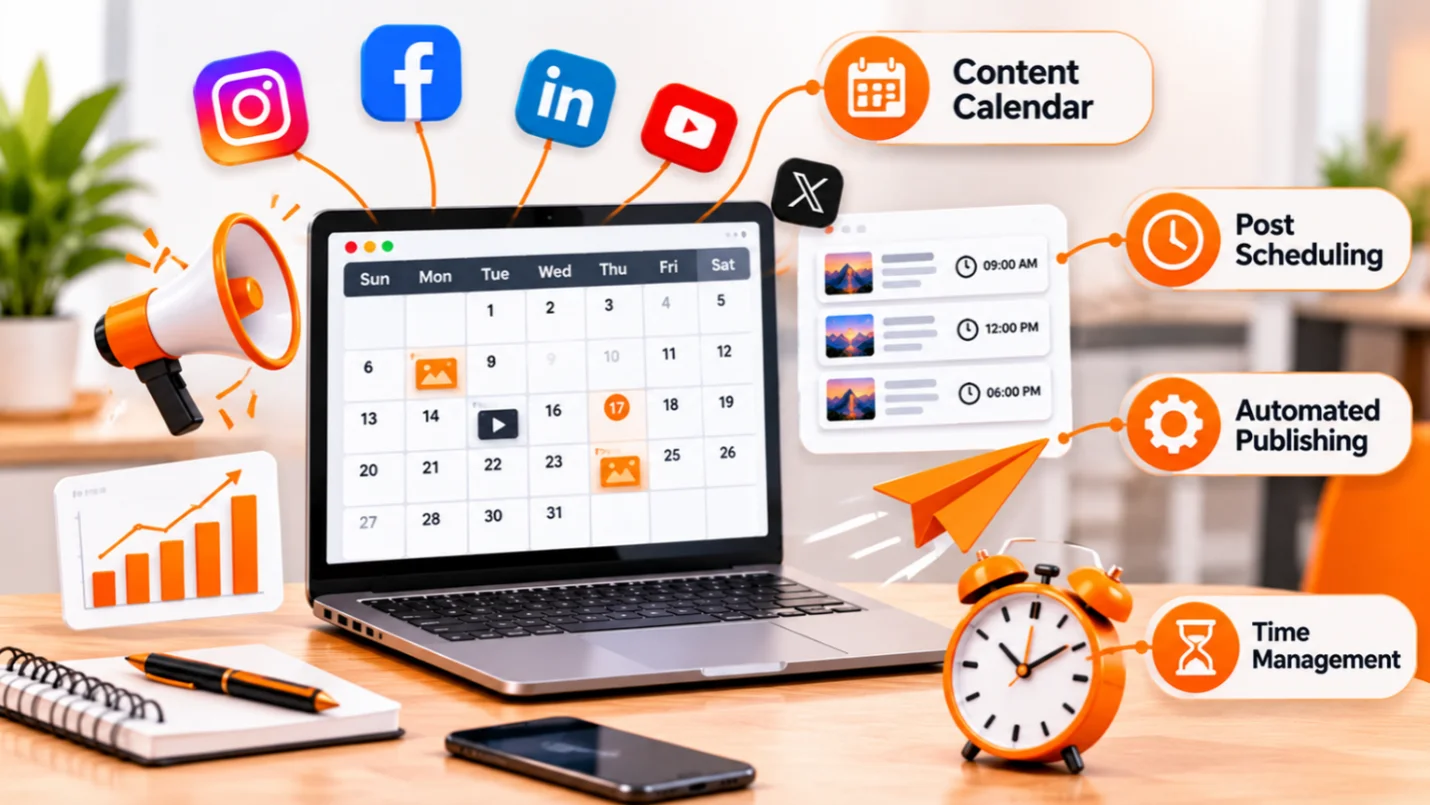
Managing multiple social media accounts requires regular planning and execution.
AI-powered social media management tools can simplify repetitive tasks such as scheduling posts, drafting captions, suggesting optimal posting times, and organizing content calendars.
This is particularly helpful for businesses managing Facebook, Instagram, LinkedIn, and other platforms simultaneously.
I recommend using automation to reduce administrative work, but businesses should avoid automating every interaction.
Social media is about communication and relationships. Customers should still have opportunities to interact with real people when they need assistance.
4. AI-Powered Audience Analysis
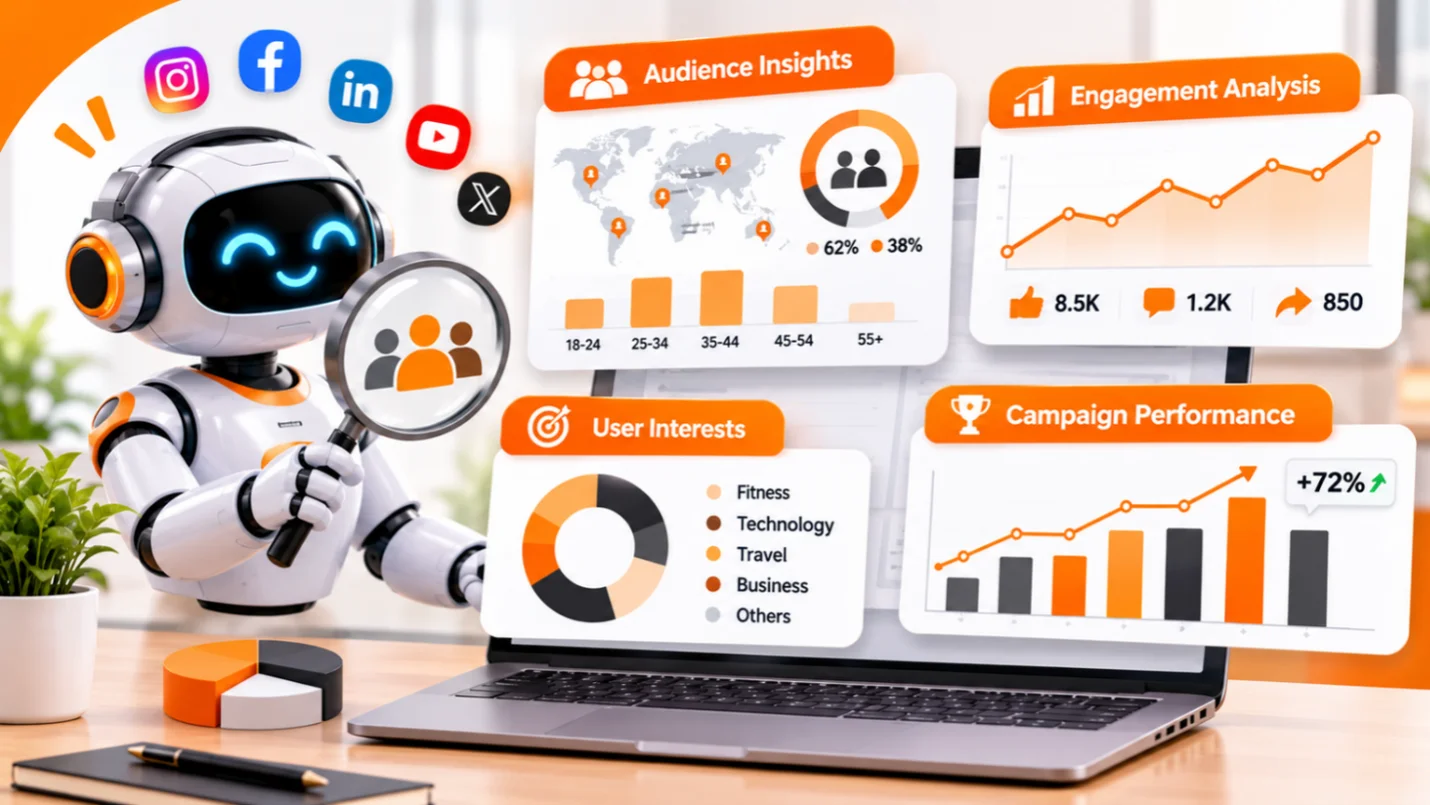
One of the biggest advantages of AI is its ability to process large amounts of information and identify useful patterns.
Social media marketers can use AI-powered analytics to understand:
- Which posts generate the highest engagement?
- What topics attract the target audience?
- Which content formats perform better?
- When audiences are most active.
- Which campaigns generate website traffic?
- What type of content contributes to conversions?
I believe businesses should use these insights to make informed marketing decisions rather than publishing content based on assumptions.
For example, if educational videos consistently generate more engagement than promotional graphics, a business can consider investing more effort in video content.
5. AI-Powered Customer Engagement
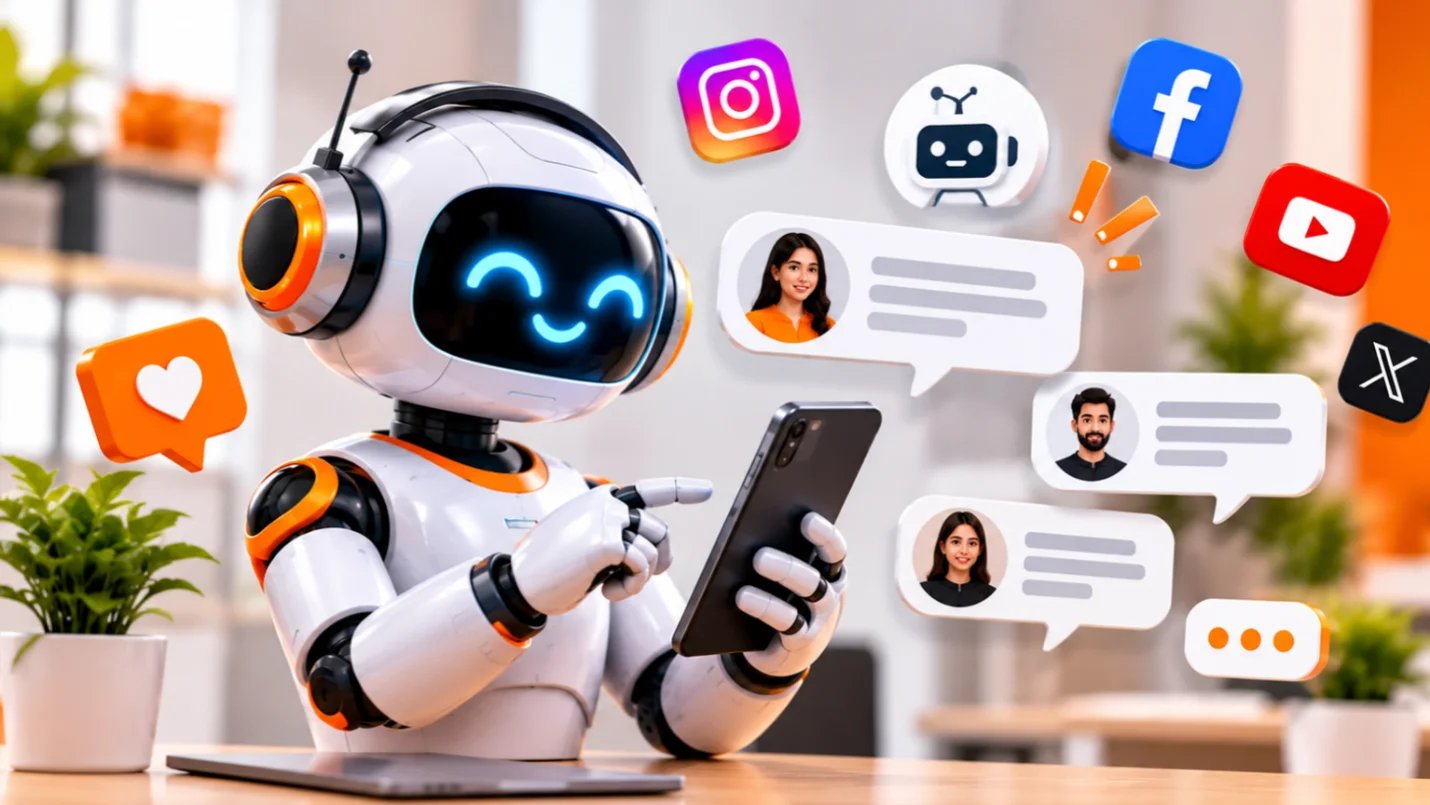
Social media has become an important communication channel between businesses and customers.
People frequently use Instagram, Facebook, and other platforms to ask questions about products, services, pricing, and availability.
AI-powered chatbots can help businesses respond to common inquiries, provide basic information, and guide customers through simple processes.
For example, an e-commerce business can automate responses related to:
- Product availability.
- Delivery information.
- Return policies.
- Order tracking.
- Payment methods.
This can improve response times and reduce the workload on customer support teams.
However, I recommend keeping human support available for complaints, complex inquiries, and situations requiring personal attention.
Expert-Recommended Popular AI Tools I Recommend for Social Media Marketing
Choosing the right AI tools can significantly improve how efficiently a business manages its social media activities.
I would not recommend subscribing to every AI platform available in the market. Instead, businesses should identify their requirements and select tools that solve specific marketing problems.
Here are some tools worth considering.
1. ChatGPT
I find ChatGPT useful for brainstorming social media topics, preparing captions, developing content calendars, writing video scripts, and repurposing existing content.
My recommended uses: Content planning, writing, research assistance, and campaign brainstorming.
2. Canva
Canva offers AI-supported design features that make it easier to create social media graphics, promotional creatives, presentations, and visual content.
My recommended use: Instagram posts, Facebook creatives, LinkedIn graphics, and marketing designs.
3. Jasper AI
Jasper helps marketing teams create branded content, promotional messages, and marketing copy using AI.
My recommended use: Brand-focused copywriting and marketing campaigns.
4. Buffer
Buffer helps businesses schedule posts, manage social media publishing, and analyze account performance. Its AI features also assist with content creation.
My recommended use: Social media scheduling and content management.
5. Hootsuite
Hootsuite provides social media management, scheduling, monitoring, and analytics features for businesses managing multiple accounts.
My recommended use: Social media monitoring and multi-platform management.
6. Predis.ai
Predis.ai helps generate social media posts, promotional creatives, captions, and videos using AI.
My recommended use: Creating social media content and product promotions.
7. Sprout Social
Sprout Social offers social media publishing, analytics, engagement management, and social listening capabilities.
My recommended use: Brand monitoring, audience insights, and engagement analysis.
8. CapCut
CapCut provides AI-assisted video editing, automatic captions, background removal, and other features that simplify video production.
My recommended use: Instagram Reels, TikTok videos, and YouTube Shorts.
My recommendation is to start with two or three tools that address your biggest challenges. You can expand your technology stack as your social media marketing requirements grow.
What Are the Benefits of Using AI in Social Media?
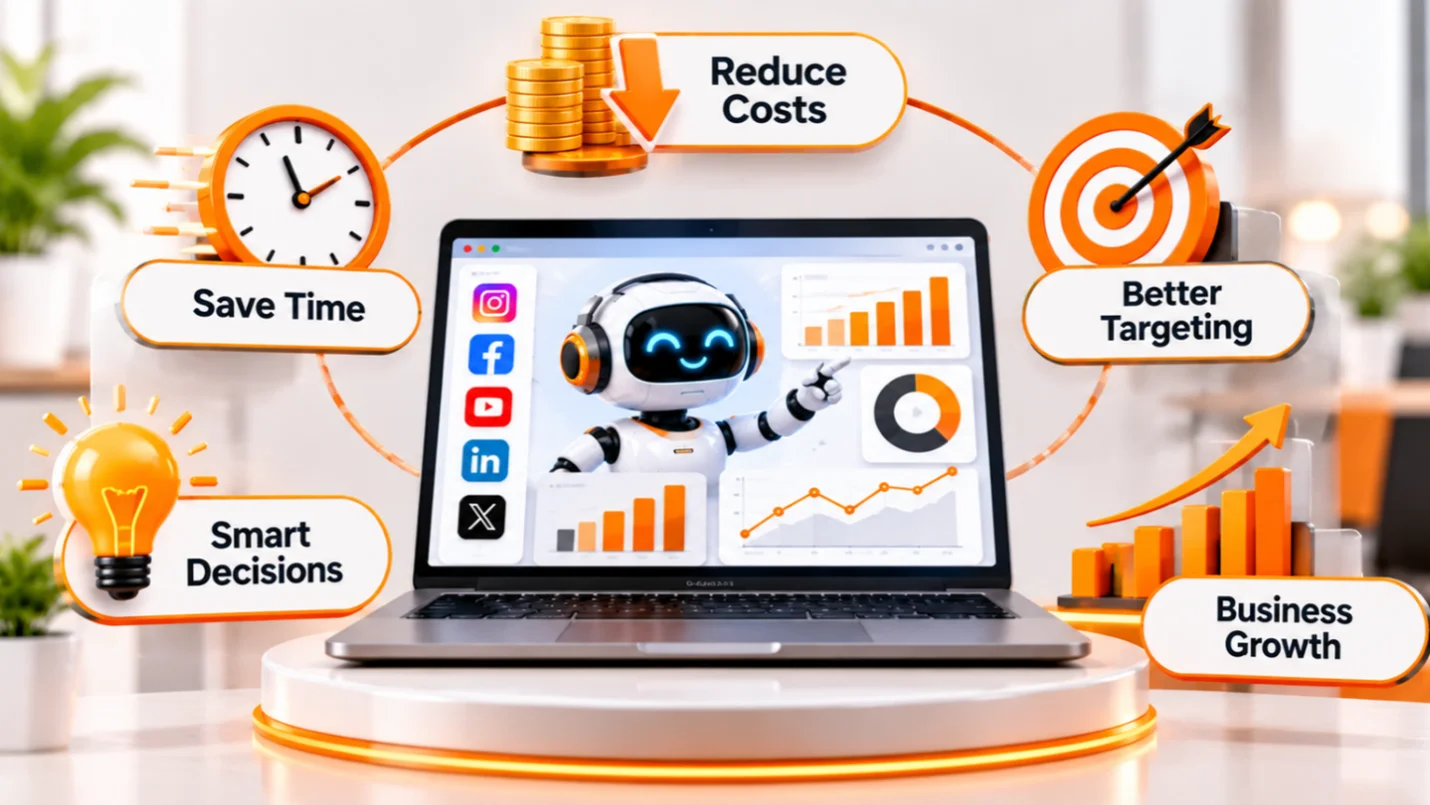
From a business perspective, AI offers several opportunities to improve marketing efficiency and decision-making.
Here are the benefits I consider most important.
1. Saves Time and Improves Productivity
Social media marketing involves several repetitive activities, including writing captions, preparing graphics, scheduling posts, and generating reports.
AI can help automate or simplify many of these tasks.
This allows marketing professionals to spend more time on strategy, creative planning, and audience engagement.
2. Reduces Content Production Costs
Hiring writers, designers, video editors, and social media managers can require a considerable marketing budget.
AI tools can support these professionals by helping them create initial drafts, generate design concepts, and simplify basic editing activities.
For small businesses and startups, this can make social media marketing more accessible.
However, I believe businesses should view AI as a productivity tool rather than a complete replacement for skilled marketing professionals.
3. Improves Audience Targeting
AI-powered audience insights help businesses understand customer interests, engagement behavior, and preferences.
This information can support better audience segmentation and more relevant marketing messages.
When combined with a well-planned campaign strategy, personalized communication can improve marketing effectiveness.
4. Supports Better Marketing Decisions
AI analytics tools can help identify patterns in social media performance.
Instead of simply measuring likes and followers, businesses can evaluate reach, engagement, website visits, leads, and conversions.
This helps marketers understand which activities contribute to actual business objectives.
5. Makes Business Growth More Scalable
As businesses expand, managing multiple social media platforms and increasing content requirements can become challenging.
AI-supported workflows can help marketing teams manage larger workloads more efficiently.
For agencies and growing businesses, this can improve operational efficiency without requiring every task to be performed manually.
What Are the Risks of Using AI in Social Media?

Although I see significant opportunities in AI, I also believe businesses need to understand its limitations.
Using AI without proper supervision can create problems that affect brand reputation, customer trust, and marketing performance.
1. Generic and Repetitive Content
One common problem with AI-generated content is that it can sound generic.
If businesses publish content directly from AI tools without editing, their social media accounts may start to look similar to their competitors’.
My recommendation: Add original ideas, industry knowledge, practical examples, and your brand’s personality to AI-generated content.
2. Incorrect Information and Misinformation
AI tools can sometimes generate inaccurate information, incorrect statistics, and misleading claims.
Publishing such information without verification can damage a business’s credibility.
My recommendation: Always verify important facts, statistics, product details, and industry-related information before publishing.
3. Data Privacy Concerns
Businesses often handle confidential customer information, private conversations, and internal marketing data.
Sharing sensitive information with unapproved AI tools can create privacy and security risks.
My recommendation: Review the privacy policies of AI platforms and establish clear internal guidelines about what information employees can share.
4. Copyright and Intellectual Property Issues
AI-generated images, videos, and written content can raise questions about copyright, licensing, and ownership.
Businesses should not assume that every AI-generated asset is automatically free from intellectual property concerns.
My recommendation: Review commercial usage rights and avoid using copyrighted material without proper permission.
5. Loss of Human Connection
Social media is about building relationships with customers.
If every interaction is automated, communication can become impersonal.
Customers may become frustrated when automated systems fail to understand their questions.
My recommendation: Use AI for routine interactions, but maintain human involvement in customer support, complaint management, and important conversations.
6. Overdependence on Social Media Algorithms
Social media platforms use AI-powered recommendation systems to decide which content users see.
However, businesses should not rely solely on organic social media reach, as platform algorithms and content distribution can change.
My recommendation: Build a diversified digital marketing strategy that includes social media, SEO, email marketing, and your own website.
My Best Practices for Using AI in Social Media Marketing
After understanding the benefits and limitations, the next question is how businesses should actually implement AI.
I recommend following these practices to get better results.
1. Start With Clear Marketing Objectives
Before choosing AI tools, identify what you want to achieve through social media marketing.
Your objectives might include:
- Increasing brand awareness.
- Generating qualified leads.
- Improving customer engagement.
- Driving website traffic.
- Increasing product sales.
- Improving customer support.
Your objectives should determine the tools, platforms, and strategies you use.
2. Maintain Your Brand Voice
Every business has a unique identity and communication style.
For example, a financial consultancy may prefer professional and educational content, while a fashion brand may use a more conversational and creative approach.
I recommend creating clear brand guidelines before using AI for content generation.
These guidelines should include tone of voice, target audience, preferred language, messaging, and content requirements.
3. Always Review AI-Generated Content
AI-generated content should never be treated as automatically ready for publication.
Review every post for accuracy, relevance, originality, and alignment with your marketing objectives.
I particularly recommend human review for healthcare, finance, legal, and other industries where inaccurate information can have serious consequences.
4. Focus on Quality Rather Than Quantity
AI makes it possible to generate dozens of social media posts quickly.
However, publishing more content does not automatically mean better engagement or business growth.
I recommend focusing on content that answers customer questions, solves problems, shares useful information, and communicates your brand’s expertise.
5. Use AI Analytics to Improve Your Strategy
Do not use AI only for creating content.
Use it to analyze campaign performance and understand what your audience responds to.
Monitor engagement, reach, website traffic, leads, and conversions.
These insights can help you identify opportunities and improve future campaigns.
6. Keep Human Creativity Involved
AI can generate ideas, but human experience helps determine whether those ideas are appropriate for a particular audience.
I believe businesses should combine AI-generated suggestions with original storytelling, customer experiences, creative thinking, and industry knowledge.
That combination is more valuable than relying entirely on automated content.
7. Protect Customer Information
Establish clear guidelines for using AI tools within your organization.
Avoid uploading confidential information to unapproved platforms, and ensure your team understands the relevant privacy requirements.
Responsible AI usage should be part of your marketing process from the beginning.
How I Would Build an AI-Powered Social Media Workflow
At RankON Technologies, I believe an effective social media strategy should connect content planning, audience understanding, publishing, engagement, and performance measurement.
Here is the workflow I recommend businesses follow when integrating AI into their social media activities.
My recommended AI social media workflow
- Research and strategy
Identify the target audience, research competitors, understand customer interests, and use AI to generate relevant content opportunities. - Content planning
Prepare a monthly social media calendar based on business objectives, seasonal opportunities, and audience interests. - AI-assisted content creation
Use AI to prepare captions, post ideas, scripts, and initial content drafts. - Creative development
Develop graphics, videos, and promotional creatives using AI-supported design tools. - Human review
Verify information, refine messaging, maintain brand consistency, and approve content before publishing. - Publishing and engagement
Schedule approved posts and use AI-assisted automation to manage routine interactions. - Performance analysis
Measure engagement, reach, traffic, leads, and conversions. Use the findings to improve the next campaign.
I believe this approach allows businesses to benefit from AI without losing the human involvement required for effective marketing.
What Is the Future of AI in Social Media Marketing?
AI is still evolving, and I expect it to become an even more important part of social media marketing in the coming years.
Some developments I believe businesses should pay attention to include:
1. Advanced AI Video Generation
AI video-generation technologies are making it easier to create promotional videos, product demonstrations, educational clips, and short-form content.
This could help businesses experiment with more video formats while reducing some production effort.
2. Smarter Social Media Advertising
AI is increasingly used on advertising platforms to automate bidding, identify potential customers, optimize campaign delivery, and support creative testing.
I believe advertisers will need to focus increasingly on strategy, conversion tracking, audience quality, and campaign measurement rather than relying solely on manual adjustments.
3. More Personalized Marketing
AI will continue to help businesses understand customer preferences and deliver more relevant marketing messages.
Personalization may become an important competitive advantage for brands that know how to use customer insights responsibly.
4. Improved Social Listening
AI-powered social listening tools can help businesses monitor brand mentions, analyze customer sentiment, and identify emerging discussions.
This can help marketing teams understand customer expectations and respond to potential issues more effectively.
5. Greater Importance of Authenticity
As AI-generated content becomes more common, I believe original ideas, genuine customer experiences, expert opinions, and authentic brand communication will become even more valuable.
Businesses that focus only on producing large volumes of automated content may struggle to differentiate themselves.
My Final Thoughts on AI in Social Media
I believe AI is an important development in the future of social media marketing, but businesses should not adopt it simply because it is becoming popular.
The objective should be to use technology to solve real marketing problems.
AI can help businesses create content faster, better understand audiences, automate repetitive tasks, and make more informed decisions. However, it cannot independently understand every business objective, customer expectation, or brand relationship.
My recommendation is to combine AI-powered tools with human creativity, marketing knowledge, and a clear strategy.
At RankON Technologies, we believe successful digital marketing is about more than adopting new technologies. It is about understanding business goals, reaching the right audience, building credibility, and generating meaningful results.
The businesses that use AI strategically, rather than blindly, will be better positioned to make the most of the opportunities it offers.
FAQs on AI in Social Media
1. How is AI used in social media marketing?
AI is used for content creation, graphic design, video editing, audience analysis, post scheduling, customer support, social listening, and advertising optimization. It helps businesses automate repetitive activities and improve marketing decisions.
2. What are the best AI tools for social media marketing?
Some popular tools include ChatGPT, Canva, Jasper, Buffer, Hootsuite, Predis.ai, Sprout Social, and CapCut. Each tool supports different activities, including content creation, design, scheduling, analytics, and video editing.
3. Can AI create social media posts?
Yes. AI tools can generate captions, hashtags, post ideas, promotional messages, video scripts, and visual content. However, I recommend reviewing and customizing AI-generated content before publishing it.
4. What are the major benefits of AI in social media?
The major benefits include improved productivity, reduced content production time, better audience insights, personalized marketing, faster customer responses, and more efficient campaign management.
5. What are the risks of using AI in social media?
Some major risks include inaccurate information, generic content, privacy concerns, copyright issues, over-automation, and reduced human interaction. Businesses should establish proper guidelines and maintain human supervision.
6. Will AI replace social media managers?
I do not believe AI will completely replace skilled social media managers. It can automate repetitive activities, but strategic planning, creative direction, brand communication, and customer relationship management still require human expertise.
7. Is AI-generated content good for social media?
AI-generated content can be useful for developing initial drafts, captions, and content ideas. However, it should be refined with original insights, brand-specific messaging, and accurate information before publication.
8. How can small businesses use AI for social media marketing?
Small businesses can use AI tools to generate content ideas, write captions, design graphics, edit videos, schedule posts, and analyze performance. Starting with a few affordable tools is a practical way to begin.
9. Does AI improve social media engagement?
AI can help businesses understand audience preferences, identify relevant topics, and personalize content. However, engagement ultimately depends on content quality, audience relevance, creativity, and consistency.
10. What is the future of AI in social media marketing?
The future will likely include advanced AI-generated video, smarter advertising, personalized recommendations, improved social listening, and more automated customer support. Authenticity and responsible AI usage will remain important.